

Did you know that the MHRA seized over 15.5 million doses of illegally traded medicines in 2023? This figure highlights a growing risk for patients, making it vital to ensure you only ever use a GPhC registered online pharmacy for your healthcare needs. It's understandable if you feel anxious about sharing your medical history online or worry about the authenticity of the pills arriving at your door. You deserve the convenience of digital healthcare without sacrificing the clinical safety you'd expect from your local high street chemist.
This 2026 guide provides you with a definitive method to verify any pharmacy's credentials, ensuring your clinical assessment is reviewed by professionals and your medication is authentic. We'll examine the specific security markers to look for, the role of the General Pharmaceutical Council, and how to secure safe delivery across the UK. By the end of this article, you'll have a clear, three-step method to secure authentic medication and peace of mind for your next home delivery.
Key Takeaways
- Master the 5-step verification process to confirm a pharmacy's legal status using the official General Pharmaceutical Council voluntary logo.
- Understand the vital role of a GPhC registered online pharmacy in ensuring that your medications are authentic, safe, and clinically appropriate for your needs.
- Learn to identify critical "red flags," such as websites offering prescription-only medicines (POM) without a required clinical consultation.
- Explore why rigorous clinical oversight is non-negotiable for high-risk treatments, ensuring patient safety remains the primary focus of digital healthcare.
- Discover how professional standards and licensed UK prescribers work together to provide a secure and reliable pathway for your essential healthcare needs.
What is a GPhC Registered Online Pharmacy?
A GPhC registered online pharmacy is a professional healthcare facility that operates under the strict regulatory oversight of the General Pharmaceutical Council (GPhC). Unlike a standard retail website, these entities are legally recognized premises allowed to dispense prescription medication across Great Britain. The GPhC functions as the independent regulator for pharmacists and pharmacy technicians, ensuring that every digital platform meets the same ethical and safety benchmarks as a traditional high-street chemist. It's a common misconception that online pharmacies exist only in the cloud. In reality, UK law dictates that every registered digital pharmacy must be tethered to a physical, inspected premises where a pharmacist is present to supervise the dispensing process.
By 2026, the standards for digital healthcare have become significantly more stringent. The GPhC updated its guidance to address the complexities of remote consultations, focusing on robust identity verification and the safe supply of high-risk medicines. These regulations ensure that the convenience of the internet doesn't compromise patient safety. A registered pharmacy isn't just a shop; it's a clinical environment where professional judgement takes precedence over commercial interests. This distinction is vital for patients who need to know their treatment is authentic, safe, and clinically appropriate for their specific health profile.
The Legal Framework of Digital Pharmacies in the UK
The regulatory landscape distinguishes between a "pharmacy" and a "prescribing service." A pharmacy is the entity that dispenses the medication, while a prescribing service employs the doctors who issue the prescriptions. Many modern platforms integrate both, but they must adhere to different sets of rules for each function. The GPhC works closely with the Medicines and Healthcare products Regulatory Agency (MHRA) to monitor the safety of the supply chain. Every GPhC registered online pharmacy must appoint a Superintendent Pharmacist. This individual is legally accountable for the clinical governance of the site. They ensure that all operations, from the storage of temperature-sensitive drugs to the accuracy of the labelling, comply with the Pharmacy Order 2010.
Online Doctor vs. Traditional Pharmacy Services
Registered pharmacies are now legally empowered to offer clinical assessments through "online doctor" portals. This shift is governed by "prescribing at a distance" guidance, which was heavily refined in 2024 to ensure clinicians have sufficient information before authorizing treatment. It's not enough for a site to just have a shopfront; the GPhC requires registration for both the digital interface and the physical dispensing hub. This prevents the rise of "ghost pharmacies" that lack professional oversight. These services use structured health questionnaires to mirror the safety checks of a face-to-face consultation. If the clinical data doesn't meet safety thresholds, the pharmacist will refuse to dispense, prioritizing the patient's long-term wellbeing over a quick transaction.
How to Verify if an Online Pharmacy is Legally Registered
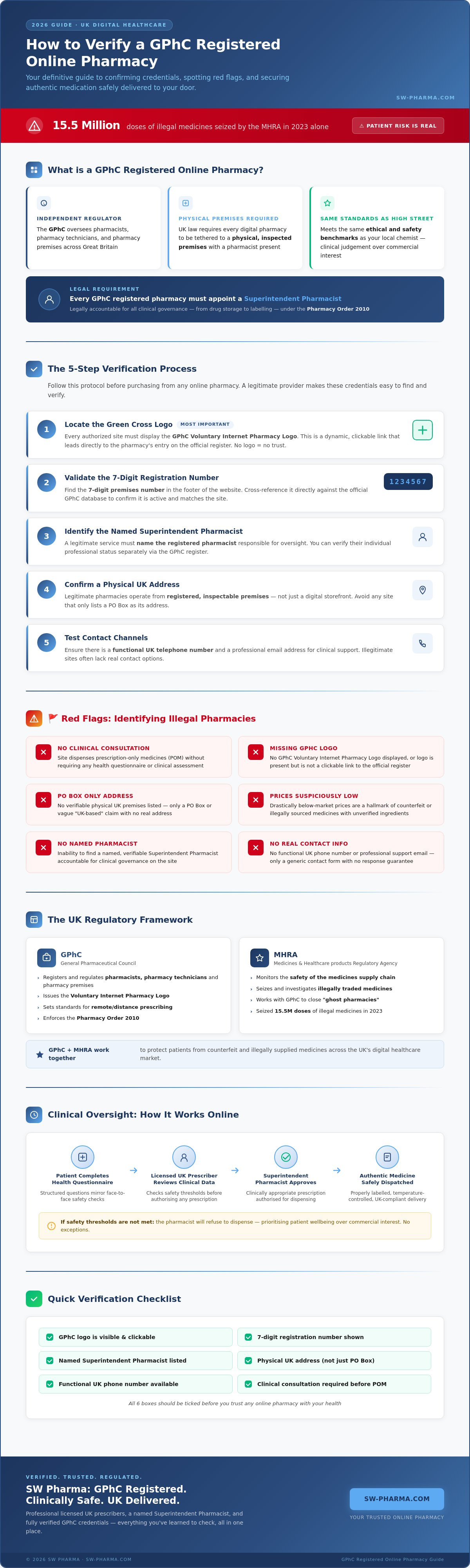
Patient safety in the digital age relies on transparency. To ensure you're using a legitimate GPhC registered online pharmacy, you must follow a rigorous verification protocol. This isn't merely a suggestion; it's a fundamental step in protecting your physiological well-being from counterfeit medications. By January 2026, regulatory standards have become more integrated, yet the burden of final verification remains with the consumer. A professional provider will always make their credentials easy to find and verify.
Follow this 5-step process to confirm a provider's clinical credentials:
- Locate the Green Cross: Every authorized site must display the GPhC Voluntary Internet Pharmacy Logo. This logo is a dynamic link that leads directly to the pharmacy's entry on the official register.
- Validate the Registration Number: Cross-reference the 7-digit premises number found in the footer against the GPhC database.
- Identify the Superintendent Pharmacist: A legal service must name the registered pharmacist responsible for oversight. You can verify their individual status separately to ensure professional accountability.
- Confirm a Physical UK Address: Legitimate pharmacies operate from registered premises, not just a digital storefront. Avoid sites that only list a PO Box.
- Test Contact Channels: Ensure there is a functional UK telephone number and a professional email address for clinical enquiries.
Using the GPhC Online Register
The GPhC register is the definitive source of truth for UK healthcare. You can search this database by name, registration number, or postcode to find detailed profiles. Pay close attention to the "Notices and Conditions" section on a pharmacy's profile. This area lists any historical disciplinary actions or specific restrictions placed on their license. It's vital to distinguish between premises registration and individual pharmacist registration. Both must be active to ensure the highest standard of pharmaceutical care and safety.
The Role of the MHRA Logo
While the GPhC focuses on the profession and premises, the Medicines and Healthcare products Regulatory Agency (MHRA) ensures that the medicines themselves meet strict safety and efficacy standards. The MHRA logo acts as a secondary layer of trust, confirming the site is authorized to sell medicines to the public. If a website appears suspicious or claims to sell prescription-only medication without a valid consultation, you can report it to the MHRA "Not Recommended" list. In 2026, the synergy between these two bodies provides a comprehensive shield, ensuring that every GPhC registered online pharmacy operates within a strictly monitored ecosystem.
The Importance of Clinical Oversight for High-Risk Medications
Accessing medication through a GPhC registered online pharmacy isn't just about convenience; it's a fundamental safety requirement for patients in the UK. High-risk treatments, particularly those for weight management or hormonal health, require rigorous clinical scrutiny to prevent adverse reactions. A major red flag in digital healthcare is any platform that allows you to select a specific dosage or brand before completing a medical consultation. This "cart-first" approach contradicts the General Pharmaceutical Council (GPhC) guidance on buying medicines safely, which mandates that a clinician must first determine if a treatment is appropriate for your specific health profile.
For advanced treatments like Mounjaro, pharmacies must implement robust safeguards. These medications often carry a "Black Triangle" status, meaning they're subject to intensive monitoring by the MHRA to identify previously unknown side effects. A registered pharmacy ensures that your baseline health metrics, such as BMI and existing cardiovascular conditions, are verified before any prescription is issued. This oversight prevents the misuse of potent GLP-1 receptor agonists and ensures that long-term condition management remains evidence-based and safe for the individual.
Weight Loss Management and Patient Safety
The rise of medical weight loss has led to a surge in unregulated social media sellers. Buying Wegovy from these sources is extremely dangerous, as there's no guarantee of product temperature control or ingredient purity. A GPhC registered online pharmacy uses mandatory identity verification (IDV) systems to match your details against official records. This process ensures that patients don't bypass safety protocols or obtain multiple prescriptions from different providers, which could lead to severe metabolic complications. Your medical history review isn't a formality; it's the barrier between effective treatment and physical harm.
Men’s and Women’s Health: Discretion vs. Safety
Discretion is vital, but it shouldn't compromise your health. When seeking Sildenafil for erectile dysfunction, a clinician must check for underlying heart issues or interactions with nitrates. Similarly, long-term use of Finasteride for hair loss requires professional monitoring to manage potential side effects. Women's health also demands high standards. A consultation for Microgynon 30 ensures that your blood pressure and smoking status are accounted for, reducing the risk of blood clots. Professional oversight transforms a simple transaction into a managed healthcare journey where your well-being is the priority.
Red Flags: Identifying Illegal and Unregulated Pharmacies
Identifying a legitimate GPhC registered online pharmacy is a matter of clinical safety. Patients should be wary of any website that lacks transparency or operates in the shadows of the digital market. A primary indicator of an illegal operation is the sale of Prescription-Only Medicines (POMs) without a valid clinical consultation. Legitimate providers require a thorough medical assessment by a UK-qualified prescriber to ensure the treatment is safe for your specific physiology. If a site allows you to add antibiotics or high-strength painkillers to a basket without a single medical question, it's operating outside the law.
You should look for these specific warning signs when evaluating a provider:
- Missing Registration Details: Every legal UK pharmacy must display the "Responsible Pharmacist" notice. This includes the pharmacist's name and their GPhC registration number.
- Unrealistic Pricing: Be cautious of "bulk-buy" discounts or pricing that seems significantly lower than market averages. In 2023, the MHRA warned that prices 50% lower than standard retail often indicate counterfeit stock.
- Lack of a Physical Address: Regulated pharmacies must have a physical, registered premise in the UK. A "Contact Us" page with only a web form and no UK phone number or address is a major red flag.
- No Professional Consultation: Clinical safety requires an interaction between the patient and a healthcare professional. Automated "tick-box" systems with no oversight don't meet UK safety standards.
The Risks of Counterfeit Medications
Unregulated sites often source products from overseas territories where manufacturing standards aren't monitored. Interpol’s Operation Pangea XVI in 2023 seized over 11,000 units of illicit medicines in the UK alone. These pills often contain zero active ingredients or, worse, toxic contaminants like heavy metals, talcum powder, or floor wax. Importing these substances bypasses the rigorous safety checks that a GPhC registered online pharmacy must perform. It puts your internal organs at risk of irreversible damage and provides no legal recourse if the treatment fails.
Data Privacy and Financial Security
Illegal pharmacies are frequently fronts for sophisticated identity theft rings. When you provide medical history and credit card details to an unregulated site, you're bypassing the protections of UK GDPR and the Data Protection Act 2018. Professional pharmacies use encrypted, UK-regulated payment gateways to protect your financial integrity. They treat your medical records with the same confidentiality as a local GP surgery; unregulated sites often sell this sensitive data to third-party marketers or scammers. Protecting your health also means protecting your digital footprint from exploitation.
Secure your health by choosing a provider that prioritises clinical excellence and regulatory compliance. Browse our range of regulated healthcare solutions today.
SW Pharma: A Commitment to GPhC Standards and Patient Care
SW Pharma operates with a singular focus: bridging the gap between digital accessibility and clinical excellence. As a premier GPhC registered online pharmacy, we don't treat healthcare as a simple transaction. We view it as a professional responsibility. Our systems are built to exceed the 2026 regulatory requirements, ensuring that patients receive the same level of care online as they would in a physical clinic. Our commitment to safety is absolute, and we strictly follow the General Pharmaceutical Council's standards for every prescription we process.
Choosing a registered online pharmacy provides peace of mind that your medication is authentic and your prescriber is qualified. We've streamlined the consultation process to be efficient without cutting corners on safety. Every step, from the initial health questionnaire to the final pharmacist check, is designed to protect your health and provide clinical clarity.
A Patient-First Approach to Digital Health
Our team comprises UK-licensed pharmacists and medical professionals who bring years of clinical experience to the digital space. Every request undergoes a transparent clinical review. If a treatment isn't suitable for you, our prescribers will explain the reasoning and suggest safer alternatives. We maintain high standards of safety by cross-referencing your medical history with current UK clinical guidelines. This isn't just about dispensing; it's about providing a healthcare service that supports your long-term well-being through ongoing patient support and expert advice.
Reliable and Discreet UK-Wide Delivery
Logistics are a critical part of our safety chain. We work with established couriers to ensure your package arrives securely and on time across the United Kingdom. For biological treatments like Mounjaro, we employ specialized cold-chain technology. These temperature-controlled containers maintain the necessary environment for up to 48 hours, ensuring the medication's stability is never compromised during transit. Privacy is equally vital. We use neutral, unbranded packaging for every shipment. Your medical history stays between you and your healthcare provider, with no outward indication of the package's contents.
Getting started with SW Pharma is straightforward and secure. You can begin a safe, clinical review on our platform today. Once our UK-licensed prescribers approve your consultation, your medication is dispensed from our GPhC registered online pharmacy and shipped directly to your door. We provide a regulated, professional path to managing your health with the convenience of modern technology.
Prioritising Your Clinical Safety in 2026
Navigating the digital healthcare landscape requires a proactive approach to verification and safety. You've seen how a GPhC registered online pharmacy serves as a vital safeguard against unregulated markets. By 2026, the integration of digital consultations and strict regulatory oversight has become the gold standard for responsible patient care. It's essential to verify that your provider uses UK-licensed clinical prescribers to maintain the highest levels of medical integrity. This clinical oversight ensures that high-risk medications are managed with the precision your health demands. Choosing a partner that values transparency and secure national delivery isn't just a choice for convenience; it's an investment in your future wellbeing. Reliable healthcare depends on the intersection of modern technology and traditional pharmaceutical ethics. You deserve the peace of mind that comes from professional, evidence-based support. Taking control of your health journey means you don't have to settle for anything less than clinical excellence at every step.
Start your safe clinical consultation with SW Pharma today
Frequently Asked Questions
Is it legal to buy prescription medication from an online pharmacy in the UK?
It's entirely legal to purchase prescription medication from a GPhC registered online pharmacy in the UK. This process is strictly governed by the Human Medicines Regulations 2012, which ensures digital providers meet the same clinical standards as high street chemists. You must ensure the provider is legitimate by verifying their credentials on the official GPhC register. This legal framework protects patients while offering the convenience of modern healthcare delivery.
How can I check if a pharmacy is really registered with the GPhC?
You can verify a pharmacy's status by visiting the General Pharmaceutical Council website and searching their official register. Every legitimate GPhC registered online pharmacy must display its unique seven digit registration number and a link to the official registry. Clicking this link should take you directly to the pharmacy's entry on pharmacyregulation.org. This verification step is essential for confirming that the facility operates under strict UK safety standards.
What should I do if I suspect an online pharmacy is selling fake medicine?
If you suspect you've received counterfeit medication, you should immediately report it to the Medicines and Healthcare products Regulatory Agency (MHRA) through the Yellow Card scheme. This reporting system helps the government track and seize illicit products. Don't consume the medication; instead, keep the packaging as evidence for the authorities. The MHRA processed over 25,000 reports of suspected adverse reactions and product issues in 2023 to maintain public safety.
Do I need a prescription from my own GP to use an online pharmacy?
You don't always need a prescription from your own GP to use these services. Many online pharmacies employ independent prescribers who can issue a prescription after you complete a clinical consultation. This assessment involves a detailed medical questionnaire to ensure the requested treatment is safe for your specific health profile. The prescriber takes full clinical responsibility for the medicine they authorise, ensuring it aligns with UK national prescribing guidelines.
Why do some online pharmacies have a green cross logo and others do not?
The green cross logo is part of a voluntary scheme launched by the GPhC to help patients identify registered premises. While it's a helpful visual cue, some legitimate pharmacies choose not to display it, while fraudulent sites might copy it. You should always click the logo to verify it links to the official GPhC website. Since 2021, the presence of the logo alone isn't enough; the verified link to the register entry is the definitive proof of safety.
Can a GPhC registered pharmacy send medicines to people outside the UK?
A GPhC registered pharmacy can send medicines abroad, but they must comply with both UK export laws and the regulations of the destination country. Some medications are controlled substances and cannot be shipped internationally under the Misuse of Drugs Act 1971. It's vital to check if your specific treatment is permitted in your country of residence. Most UK providers focus on domestic delivery to ensure clinical follow-up and adherence to local safety protocols.
What is the difference between a registered pharmacy and a prescribing service?
A registered pharmacy is responsible for the safe dispensing and delivery of medications. In contrast, a prescribing service employs doctors or pharmacists who assess your health and write the legal prescription. Many modern platforms integrate both functions to provide a seamless experience. While the GPhC regulates the pharmacy premises, the Care Quality Commission (CQC) typically oversees the doctors providing the clinical consultations in England to ensure high standards of patient care.
How does an online pharmacy verify my identity?
Online pharmacies verify your identity using electronic databases that cross-reference your details against the electoral roll or credit records. This process, often called a soft check, doesn't affect your credit score but confirms you're a real person. If electronic checks fail, the pharmacy will request a photo of your passport or driving licence. This mandatory step follows GPhC guidance updated in 2019 to prevent identity fraud and ensure medications reach the correct patient.

![Tadalafil vs Sildenafil Effectiveness: A UK Clinical Comparison [2026]](https://getautoseo.com/storage/hero_images/article_681719_1776514276.jpg)
![Wegovy Side Effects Management: A Clinical Guide for UK Patients [2026]](https://getautoseo.com/storage/hero_images/article_665463_1776498695.jpg)