
![Wegovy Side Effects Management: A Clinical Guide for UK Patients [2026]](https://getautoseo.com/storage/hero_images/article_665463_1776498695.jpg)
Did you know that 44.2% of participants in the STEP 1 clinical trials reported nausea as their primary physiological challenge during the initial stages of treatment? For many patients in the UK, this persistent discomfort isn't just a minor inconvenience; it's a barrier that affects work productivity and creates genuine anxiety about the next scheduled dose increase. It's common to feel caught between the desire for better health and the fear of how your body will react to the medication's titration.
You deserve a weight loss journey that feels sustainable and controlled rather than a series of physical hurdles. This guide provides the practical strategies and clinical protocols you need for effective wegovy side effects management, ensuring you can achieve your goals with confidence and clarity. We'll examine the science-backed methods to mitigate gastrointestinal distress, explain the logic behind the standard five-step titration schedule, and define the specific clinical "red flags" that require an immediate consultation with your GP or pharmacist.
Key Takeaways
- Understand the physiological mechanism of GLP-1 and how semaglutide’s impact on gastric emptying influences your daily digestive comfort.
- Implement evidence-based wegovy side effects management through targeted dietary adjustments and clinical hydration protocols to maintain peak vitality.
- Discover why the 5-month titration schedule is essential for reaching a biological steady state and how to safely navigate dose escalations.
- Identify the essential pharmacy-approved aids and over-the-counter solutions that should form your personal support kit for consistent symptom relief.
- Master the ability to distinguish between manageable treatment transitions and clinical "red flags" that require immediate consultation with your prescriber.
Why Wegovy Causes Side Effects: The Science of GLP-1
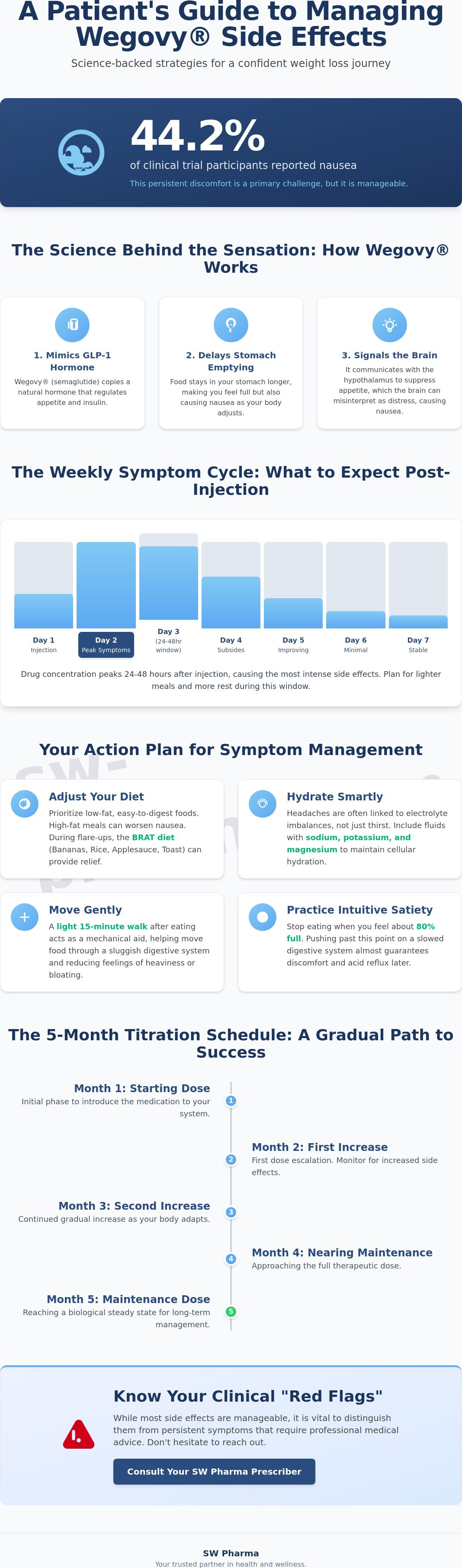
Wegovy uses semaglutide to mimic a natural hormone called Glucagon-like Peptide-1. This hormone tells your body to release insulin and, crucially, slows down the rate at which your stomach empties. Understanding the science of semaglutide helps clarify why these physical shifts occur. When digestion slows, the stomach remains full for extended periods. In clinical terms, this creates a temporary, mild state of gastroparesis. This physical delay is the primary driver of the nausea reported by approximately 44% of patients in clinical trials.
It's vital to recognize that these sensations often indicate the medication is active in the gut. Most patients experience "transient" effects, which are short-term adjustments as the central nervous system adapts to the new hormonal balance. However, a small percentage of users may face "persistent" intolerance, where symptoms don't subside after the initial titration phase. Effective wegovy side effects management starts with distinguishing between these two states to ensure your weight loss journey remains sustainable.
The Gut-Brain Connection
Wegovy doesn't just work in the stomach; it communicates directly with the hypothalamus to suppress appetite and increase feelings of satiety. The brain often misinterprets the unaccustomed presence of food remaining in the stomach for longer periods as a signal of distress, manifesting as nausea. This feedback loop involves the vagus nerve, which sends constant updates from the digestive tract to the central nervous system. During the first 4 to 8 weeks of treatment, the brain is in a state of high sensitivity. As you continue the course, the nervous system usually recalibrates its response to these signals, leading to a reduction in discomfort.
Why Side Effects Peak Post-Injection
Semaglutide has a clinical half-life of approximately 7 days, but its concentration in the bloodstream isn't static throughout the week. Levels typically peak within a 24 to 48 hour window after your weekly subcutaneous injection. This spike in drug concentration correlates directly with symptom intensity, which is why many UK patients report more significant challenges early in the week.
- The 48-Hour Window: Expect the highest intensity of nausea or fatigue within the first two days after your dose.
- Concentration Correlation: As the drug level stabilizes in your plasma, side effects usually diminish by day four or five.
- Titration Impact: Symptoms are most frequent when moving between doses, such as the jump from 0.5mg to 1.0mg.
Managing expectations for these first two days is essential for long-term success. Planning your schedule to allow for lighter meals and increased hydration during this 48-hour peak can significantly improve your experience. Consistent wegovy side effects management relies on timing your lifestyle adjustments to match these known pharmacological peaks.
Practical Strategies for Managing Common Gastrointestinal Symptoms
Effective wegovy side effects management starts with understanding that semaglutide physically slows down your digestive system. This delay in gastric emptying means food remains in your stomach for a significantly longer duration than usual. To accommodate this change, you must pivot toward low-fat nutritional principles. High-fat foods are harder to break down and, when coupled with slowed digestion, often lead to severe nausea or "heavy" stomach sensations. Many UK patients find success using the BRAT diet (Bananas, Rice, Applesauce, Toast) as a temporary baseline when symptoms peak during dose escalation. This clinical overview of Wegovy highlights that while gastrointestinal issues are common, they're often transient if managed with specific lifestyle adjustments.
Hydration protocols require more than just increasing your water intake. Wegovy-induced headaches are frequently linked to electrolyte imbalances rather than simple thirst. It's vital to include sodium, potassium, and magnesium in your fluids to maintain cellular hydration. Additionally, your physical activity levels directly impact how well you process meals. A light 15-minute walk after eating isn't just for cardiovascular health; it's a mechanical aid that helps move food through a sluggish digestive tract. You should also practice "intuitive satiety" by stopping your meal at the first sign of being 80% full. Pushing past this point almost guarantees acid reflux later in the day.
Conquering Nausea and Vomiting
Nausea is the most reported side effect, affecting roughly 44% of users in clinical settings. To combat this, adopt a "small and frequent" meal rule, eating five tiny portions instead of three large ones. Ginger and peppermint tea are excellent natural antagonists to nausea. You should also avoid "trigger foods" like greasy, spicy, or ultra-processed items that irritate the stomach lining. If smells become a trigger, try eating cold or room-temperature foods. These emit fewer aromas than steaming hot meals, making them much easier to tolerate during the first few weeks of treatment.
Managing Constipation and Diarrhoea
The "Fiber Paradox" is a frequent challenge in wegovy side effects management. While fiber is usually the solution for bowel regularity, adding too much too quickly to a slowed gut can cause painful bloating and gas. It's better to increase fiber intake gradually, perhaps by 5g every few days. If you experience constipation, UK pharmacists typically recommend osmotic stool softeners rather than stimulant laxatives, which can cause aggressive cramping. Conversely, if diarrhoea occurs, watch for signs of dehydration such as dark urine or dry mouth. Maintaining a balance is easier when you track your intake and output for the first month.
Addressing "Sulphur Burps" and Acid Reflux
Trapped gas that smells like sulphur occurs because food is fermenting in the stomach for too long. To mitigate this, avoid eating at least 3 hours before lying down. Sleeping on a slight incline can prevent nocturnal reflux from damaging your oesophagus. Natural digestive enzymes or over-the-counter simeticone can help break down gas bubbles more efficiently. If you find these symptoms persistent, it's worth consulting a specialist. You can find further guidance on maintaining digestive health through the expert resources at SW Pharma, where we focus on clinical purity and patient well-being.
Navigating the Wegovy Titration Schedule Safely
The standard Wegovy protocol in the UK follows a structured 20-week escalation path. Patients begin with a 0.25mg dose for four weeks, gradually stepping up to 0.5mg, 1.0mg, 1.7mg, and finally the 2.4mg maintenance dose. This deliberate pace allows the metabolic system to reach a "steady state," where the concentration of semaglutide in the blood remains consistent. Effective wegovy side effects management relies on this gradual adaptation. Rushing the schedule often leads to unnecessary gastrointestinal distress that can be avoided with patience.
Choosing the right time for your weekly injection can significantly impact your experience. Many UK patients opt for Friday evening dosing. This strategy allows the "titration peak," which occurs within the first 48 hours of a new dose, to pass while they're at home over the weekend. If you struggle with daytime fatigue, evening injections might help you sleep through the most intense symptoms. Conversely, if you experience acid reflux, a morning dose followed by a day of upright activity may be preferable to avoid nighttime discomfort.
Clinicians sometimes employ a "stay at dose" strategy. If side effects feel unmanageable at the end of a four-week block, your prescriber might suggest remaining at your current level for another month. This flexibility ensures your body fully adjusts before the next increase, prioritising long-term adherence over rapid escalation. It's a clinical tool that places your comfort and safety at the centre of the weight loss journey.
Managing the Jump Between Doses
The transition from 0.5mg to 1.0mg is frequently identified as a pivotal point where symptoms may intensify. We define the "titration peak" as the 48 hours following a dose increase. During this window, the risk of nausea and appetite suppression is at its highest. Proactive wegovy side effects management involves preparing your body in the week leading up to a higher dose. Increasing your water intake to 2.5 litres daily and focusing on small, protein-rich meals can mitigate the impact of the dose jump. The European Medicines Agency guidance on Wegovy highlights that these gastrointestinal events are usually transient and diminish as the body grows accustomed to the medication.
Injection Site Rotation and Skin Care
Where you choose to inject matters for both comfort and absorption. Rotating between the abdomen, thigh, and upper arm prevents the development of hard lumps or localized skin irritation. Clinical data suggests that approximately 6.2% of patients may experience mild redness or itching at the injection site. To minimize this, ensure the skin is clean and dry before administration. Use a fresh needle every time and avoid injecting into bruised or tender skin. If you notice persistent itching, a cold compress applied for 10 minutes usually provides relief without interfering with the medication's efficacy.
The Wegovy Support Kit: Lifestyle and OTC Solutions
Effective wegovy side effects management requires more than just patience; it demands a structured toolkit of pharmacy-approved aids and lifestyle adjustments. When the body adapts to a GLP-1 agonist, the gastrointestinal system often requires temporary support to maintain equilibrium. This proactive approach ensures that minor discomforts don't escalate into reasons for discontinuing treatment.
Essential Over-the-Counter Aids
Acid reflux and nausea are the most frequently reported hurdles for UK patients. Keeping a supply of alginates, such as Gaviscon Advance, helps neutralise stomach acid and provides a physical barrier against reflux. For more persistent nausea, pharmacists may suggest anti-emetics like Cyclizine, though these require careful professional oversight. It's vital to consult a reputable online pharmacy London before mixing any over-the-counter (OTC) medications with your weight loss injections to avoid potential drug interactions.
- Alginates and Antacids: Use these for immediate relief from "sulphur burps" or heartburn.
- Rehydration Salts: Dioralyte or similar oral rehydration therapies are essential when lethargy strikes. This "Wegovy fatigue" is often a result of electrolyte imbalances caused by reduced fluid and carbohydrate intake.
- Stool Softeners: Bulk-forming laxatives can manage the constipation that occurs as gastric emptying slows down.
Nutritional Support and Protein Sparing
Rapid weight loss carries the risk of sarcopenia, which is the loss of lean muscle mass. To protect metabolic health, patients should aim for a protein target of roughly 1.2g to 1.5g per kilogram of body weight. On days when solid food feels unappealing due to nausea, liquid nutrition becomes a clinical necessity. High-quality protein shakes with minimal added sugars provide the amino acids required to maintain muscle integrity without overtaxing the digestive system.
Proper wegovy side effects management also involves monitoring your micronutrient levels. B-complex vitamins and magnesium can support energy metabolism and nerve function during the calorie deficit. For those looking for comparable dietary strategies, you can reference the Mounjaro for Weight Loss guide, which outlines similar nutritional protocols for GLP-1 and GIP receptor agonists.
The psychological shift is equally significant. Many patients experience a "loss of food as a reward" sensation, as the drug dampens the dopamine response to high-fat, high-sugar foods. This isn't a side effect to be "cured" but a physiological change to be managed. Reframing this as "food freedom" allows patients to develop new, non-food-based reward systems, such as physical activity or social engagement, which supports long-term weight maintenance.
Optimise your journey with professional guidance and high-quality support. Discover our range of clinical-grade supplements at SW Pharma to support your metabolic health.
Clinical Oversight: When to Consult Your SW Pharma Prescriber
Effective wegovy side effects management involves a collaborative relationship between you and your clinical team. While most patients experience mild gastrointestinal adjustments during the first 16 weeks of titration, distinguishing between expected discomfort and serious medical "red flags" is vital for your safety. Clinical data suggests that while nausea affects up to 44% of patients, severe complications like acute pancreatitis are rare, occurring in roughly 0.2% of cases. You must contact your prescriber immediately if you experience sharp, persistent abdominal pain that radiates to your back, as this is a primary indicator of pancreatic inflammation.
Other symptoms requiring urgent consultation include persistent vomiting that prevents hydration and jaundice, which is a yellowing of the eyes or skin that may signal gallbladder issues. Manageable nausea typically peaks 24 to 48 hours after an injection and subsides as your body adapts. If your symptoms don't follow this pattern or if they prevent you from performing daily tasks, your SW Pharma clinician needs to review your record. We monitor your progress to ensure the medication supports your health without compromising your quality of life.
The Importance of Continuous Monitoring
Your patient portal serves as the primary tool for reporting side effects and tracking your physiological response to Semaglutide. You should log any recurring symptoms here so our clinical team can assess if your current dose is appropriate. You must never attempt to split doses or alter your injection schedule independently. The Wegovy FlexTouch pen is engineered for precision; tampering with the mechanism or skipping doses without advice can lead to blood sugar fluctuations or increased toxicity. For a detailed roadmap of what to expect during your first year of treatment, consult the Wegovy UK Pillar Guide.
Transitioning and Long-Term Management
If side effects remain intrusive after 8 weeks on a specific dose, we may adjust your plan to focus on dose maintenance at a lower level. Not every patient requires the maximum 2.4mg dose to achieve significant weight loss; many find long-term stability at 1.0mg or 1.7mg. If Wegovy continues to cause distress, our clinicians can discuss transitioning you to alternatives like Mounjaro, which targets both GLP-1 and GIP receptors and may offer a different tolerability profile for your system. Your journey is unique, and our priority is finding the balance between efficacy and comfort. To begin your assessment, complete your clinical review for Wegovy today.
Taking Control of Your Metabolic Health
Achieving long term weight loss requires more than just a medication; it demands a clinical partnership. Clinical data from the STEP 1 trials indicates that while gastrointestinal symptoms affect approximately 74% of patients, these effects are typically transient and manageable with a structured approach. By following a precise 20 week titration schedule and utilizing specific lifestyle adjustments, you'll minimize discomfort while your body adapts to the GLP-1 hormone. Mastering wegovy side effects management is the key to staying on track and reaching your target weight safely.
You don't have to navigate these physiological changes alone. Our team provides the professional oversight necessary to ensure your journey is both effective and comfortable. As a GPhC Registered Pharmacy, we prioritize your safety and clinical outcomes through every stage of the process.
Take the next step toward a healthier future today. Start your weight loss consultation with SW Pharma and benefit from a free clinical review by UK prescribers. We provide discreet, tracked UK delivery to ensure your treatment arrives securely and on time. Your commitment to health deserves expert support.
Frequently Asked Questions
How long do Wegovy side effects typically last?
Most patients experience mild to moderate gastrointestinal symptoms for approximately 2 to 4 weeks following each dose increase. Clinical trials indicate that 44% of participants reported nausea, but these symptoms typically subside as the body adapts to the GLP-1 receptor agonist. Consistent Wegovy side effects management involves sticking to the titration schedule prescribed by your UK clinician to minimize long-term discomfort and ensure metabolic stability.
Can I drink alcohol while taking Wegovy, or will it make side effects worse?
You can consume alcohol in moderation, but it often intensifies side effects like nausea, headaches, and dehydration. Alcohol also affects blood glucose levels, which may complicate the metabolic benefits of your medication. Limiting intake to 14 units per week, as per NHS guidelines, helps prevent gastric irritation. It's important to stay hydrated because alcohol and semaglutide both influence your body’s fluid balance.
Why am I so tired on Wegovy, and how can I increase my energy levels?
Fatigue affects roughly 11% of patients and usually stems from a rapid reduction in caloric intake or shifts in blood sugar regulation. To boost energy, focus on consuming 1.2 to 1.5 grams of protein per kilogram of body weight and maintaining consistent hydration. Small, frequent meals help stabilize glucose levels. This reduces the lethargy often associated with the initial stages of your weight management journey.
Is it normal to have a headache after my Wegovy injection?
Headaches are a documented side effect for about 14% of users, particularly during the first 48 hours after an injection. This reaction is frequently linked to dehydration or sudden changes in dietary patterns. Drinking 2 litres of water daily and ensuring consistent electrolyte intake can significantly reduce the frequency of these episodes. If pain persists, simple paracetamol is generally safe to use alongside your treatment.
What should I do if I miss a dose because I feel too unwell?
If you miss a dose due to illness, you should administer it as soon as possible within 5 days of the scheduled date. If more than 5 days have passed, skip the dose and resume your regular schedule on the next planned day. Don't take a double dose to make up for a missed one. Consult your pharmacist if you miss two consecutive doses, as you might need to restart.
Does Wegovy cause hair loss, and is it permanent?
Hair thinning, known as telogen effluvium, occurred in 3% of clinical trial participants and is typically a temporary response to rapid weight loss. This condition isn't a direct side effect of the drug's chemistry but a physiological reaction to metabolic change. It usually reverses within 6 to 9 months as your body's nutritional status stabilizes. Ensuring adequate zinc and biotin intake through a balanced diet supports follicular health.
Can I take Wegovy with other medications for nausea or indigestion?
You can use over-the-counter treatments like cyclizine for nausea or antacids for indigestion alongside your treatment. Proactive Wegovy side effects management often includes these supportive therapies to improve daily comfort and adherence. However, always inform your UK healthcare provider about any new medications. Wegovy's effect on gastric emptying can sometimes alter how other oral drugs are absorbed into your system, affecting their overall bioavailable concentration.
What is "Wegovy Face" and is it a side effect of the medication?
"Wegovy Face" isn't a clinical side effect but a term describing the loss of facial volume that occurs with significant weight reduction. When you lose a substantial percentage of body fat quickly, the natural fat pads in the cheeks and under the eyes diminish. This leads to a more hollowed or aged appearance. This is a physiological result of fat depletion seen in any successful, high-impact weight loss intervention.
![Tadalafil vs Sildenafil Effectiveness: A UK Clinical Comparison [2026]](https://getautoseo.com/storage/hero_images/article_681719_1776514276.jpg)
![Wegovy vs Saxenda for Weight Loss: A Clinical Comparison for UK Patients [2026]](https://getautoseo.com/storage/hero_images/article_1261167_1776484316.jpg)