

By the time a man in the UK reaches the age of 50, there's a 50% chance he's already noticed significant thinning, a reality that often feels like losing a core part of one's identity. It's understandable if you've spent hours scrolling through conflicting forum posts or felt apprehensive about potential hormonal shifts. Most men find the sheer volume of anecdotal evidence more confusing than helpful when considering finasteride as a medical solution for hair restoration.
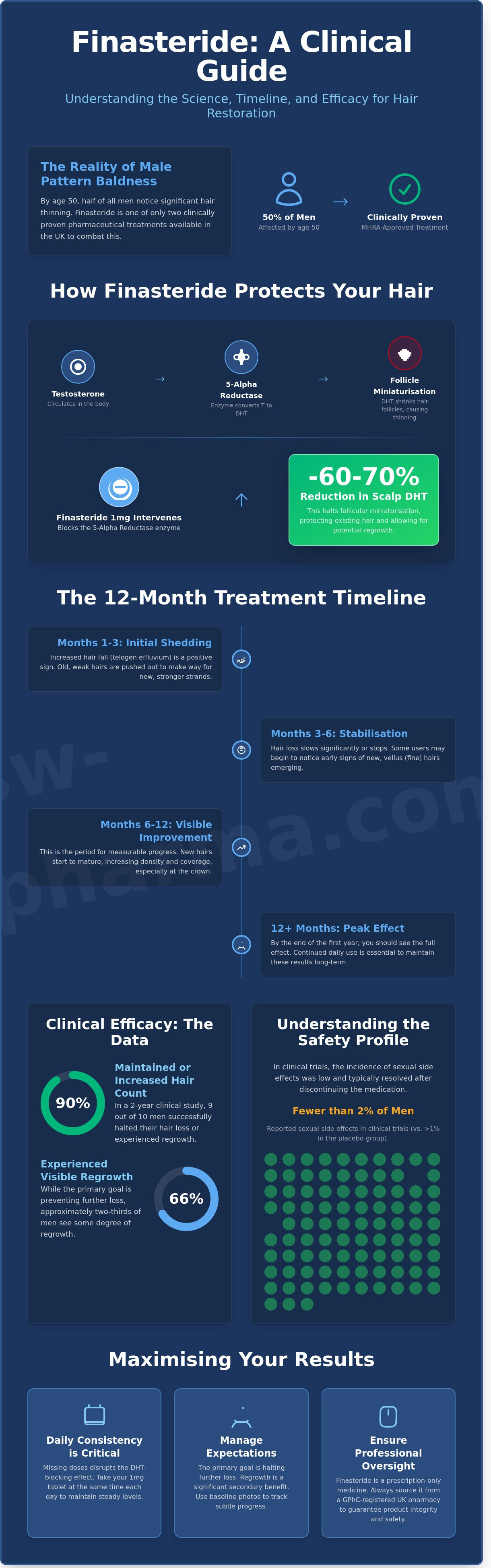
We've designed this clinical guide to cut through the noise, providing you with a clear understanding of the science, safety profile, and the realistic 6 to 12 month timeline required for visible results. You'll learn how this daily treatment works to stabilise hair loss at the follicle level. Clinical data from peer reviewed studies shows that 90% of men successfully maintained or increased their hair count over a two year period. This guide explores the pharmacological mechanisms and the simple, discreet routine that helps you regain control over your appearance with confidence and professional clarity.
Key Takeaways
- Gain a clear understanding of how finasteride functions as a Type II 5-alpha reductase inhibitor to target the physiological roots of male pattern baldness.
- Discover the realistic 12-month timeline for hair restoration and why daily consistency remains the most critical factor in achieving measurable progress.
- Review objective clinical data regarding safety to better understand why fewer than 2% of men in trials experience sexual side effects.
- Learn how to optimise your results by adopting the "gold standard" approach, combining clinical treatments with expert-led best practices.
- Find out how to safely navigate the UK prescription process through GPhC-registered pharmacies to ensure professional oversight and product integrity.
What is Finasteride and How Does it Combat Hair Loss?
Finasteride belongs to a class of medications known as Type II 5-alpha reductase inhibitors. While researchers originally developed the compound to treat enlarged prostates, clinical trials in the 1990s revealed its potent ability to stabilise hair density. In the UK, the Medicines and Healthcare products Regulatory Agency (MHRA) has approved finasteride as a prescription-only treatment for androgenetic alopecia, commonly known as male pattern baldness. It remains one of only two clinically proven pharmaceutical treatments for this condition available on the British market.
Understanding the dosage is vital for safety and efficacy. For hair loss, the standard daily dose is 1mg. This differs significantly from the 5mg dose used for benign prostatic hyperplasia. Patients shouldn't confuse the two concentrations; the 1mg dose is specifically calibrated to manage scalp hormone levels while minimising systemic impact. Following this precise clinical protocol ensures the treatment remains focused on the hair follicles rather than other biological systems.
The Role of Dihydrotestosterone (DHT)
Male pattern baldness isn't caused by a simple excess of testosterone, but rather by the body's sensitivity to a byproduct called Dihydrotestosterone (DHT). The 5-alpha reductase enzyme converts circulating testosterone into DHT within the hair follicles. Once present, DHT triggers a process called follicular miniaturisation. This causes the growth phase of the hair cycle to shorten, making individual strands thinner, shorter, and more brittle over time. Finasteride intervenes by blocking the enzyme's activity. Clinical data shows that a daily 1mg dose can lower scalp DHT levels by 60% to 70%, effectively halting the miniaturisation process in most men.
The Difference Between Stopping Loss and Regrowth
Managing expectations is a cornerstone of successful treatment. Finasteride is primarily a preventative tool. Its main strength lies in its ability to preserve the hair you currently have rather than resurrecting long-lost follicles. When a follicle has been dormant for several years, it often reaches a point of total atrophy where pharmaceutical intervention cannot restart growth. Thinning follicles are much more responsive to treatment than those that have already stopped producing hair entirely.
Finasteride acts as a biological shield, protecting follicles from hormonal damage to maintain current hair density. While roughly 66% of men in long-term clinical studies experience some degree of visible regrowth, the most significant clinical success is the cessation of further thinning. Consistency is key; the protective shield only exists as long as the medication is present in the system. If treatment stops, DHT levels will return to their baseline within weeks, and the miniaturisation process will resume.
The 12-Month Timeline: What Happens Month-by-Month?
Hair follicles operate on a slow, rhythmic biological clock. Successful treatment with finasteride requires a disciplined commitment to a daily routine. Results don't appear overnight because the human hair growth cycle spans several years; the medication needs time to lower dihydrotestosterone (DHT) levels and allow follicles to recover. Clinical data from long-term trials shows that 90% of men either maintain or increase their hair count over time, but these changes are incremental. Consistency is the most vital factor for success. Missing doses disrupts the steady state of the medication in your system, which can stall progress.
We recommend taking high-quality baseline photographs from the front, crown, and sides before starting. These images provide an objective record of your journey. Because you see yourself in the mirror every day, subtle improvements in density are often difficult to perceive without side-by-side comparisons. It's also vital to understand that this is a long-term commitment. If you stop the treatment, the DHT-blocking effect ceases, and any regained hair will typically be lost within 6 to 12 months.
Months 1 to 3: The Initial Shedding Phase
Many men feel discouraged when they notice increased hair fall during the first 90 days. This process is medically known as telogen effluvium. It occurs because the medication encourages follicles to transition from a resting phase into a new growth phase. The old, weakened hairs are pushed out to make room for stronger, healthier strands. This shedding is actually a positive clinical indicator that the treatment is beginning to alter your hair cycle. Don't stop the treatment during this period; your follicles are simply resetting for better growth.
Months 3 to 6: Stabilisation and Early Growth
By the six-month mark, most users observe that their hair loss has slowed significantly or stopped entirely. You might see fine, light-coloured hairs appearing along the hairline or crown. These are vellus hairs, which represent the first stage of regrowth. If you experience any mild side effects, they often manifest and then subside during this window as the body reaches a new hormonal equilibrium. For those looking to support their scalp health during this transition, exploring pharmaceutical-grade nutritional support can complement your clinical regime.
Months 6 to 12: Peak Results and Maintenance
The 12-month milestone is the clinical gold standard for evaluating the efficacy of finasteride. During this period, the initial fine hairs begin to mature into terminal hairs. These are thicker, more pigmented, and provide much better scalp coverage. You'll likely notice a visible increase in overall density and a reduction in the "see-through" appearance of the hair. Once you reach this stage, you move into the maintenance phase. The goal shifts from regrowth to preserving these gains through continued, daily application of the treatment.
Understanding Safety: Side Effects and Clinical Reality
Clinical safety remains a primary concern for men considering hair loss treatment. Data from long-term studies, such as the landmark five-year trials published in the Journal of the American Academy of Dermatology, show that finasteride is well-tolerated by the vast majority of patients. Only 1.8% of men in the clinical trial group reported decreased libido, compared to 1.3% in the placebo group. This narrow 0.5% margin suggests that many reported physiological responses are often indistinguishable from natural variations or psychological factors.
Anxiety plays a substantial role in how patients perceive their symptoms. The nocebo effect occurs when a patient's negative expectations lead to the physical manifestation of side effects. A 2017 study published in the Journal of Sexual Medicine found that patients who were specifically warned about sexual dysfunction were three times more likely to report it than those who weren't. Most physiological changes are temporary. If a patient stops the medication, the body typically returns to its baseline hormonal state within a few weeks as the enzyme levels stabilise.
Common vs Rare Side Effects
While most men experience no issues, a small subset may notice changes. These effects typically appear within the first year of treatment and often resolve even if the medication is continued. Common side effects include:
- Decreased libido or sex drive.
- Difficulty achieving or maintaining an erection.
- A reduction in the volume of ejaculate.
Rarer occurrences, such as breast tenderness, gynaecomastia, or persistent mood changes, affect fewer than 1 in 1,000 men. You should report any physical or emotional changes to your GP or pharmacist immediately to ensure your treatment plan remains safe and effective.
Who Should Avoid Finasteride?
Safety protocols for finasteride are strict to prevent avoidable risks. Women who are pregnant or planning to conceive must never handle crushed or broken tablets because the active ingredients can cause birth defects in male foetuses. Men with severe liver impairment require careful monitoring because the liver processes the medication. Additionally, men with a history of prostate cancer must consult their oncologist; the drug can lower PSA levels by approximately 50%, which may mask diagnostic results. A clinical assessment is mandatory before any UK prescription is issued to ensure the treatment is appropriate for your specific health profile.
Maximising Your Results: Best Practices for Success
Achieving the best results with finasteride requires a disciplined approach. You should integrate the medication into your morning or evening ritual to ensure you never miss a dose. Clinical data from a 10-year study published in 2011 showed that 90% of men maintained or increased their hair count when they remained consistent with their treatment plan. If you miss doses, your DHT levels will climb back to baseline levels within 48 to 72 hours, which restarts the follicle miniaturisation process. Set a recurring daily alarm on your phone or use a physical pill organiser to stay on track. It's helpful to remember that the medication's bioavailability isn't affected by food, so you can take it with or without a meal.
The Power of Combination Therapy
Clinical research suggests that the "gold standard" for hair restoration isn't a single product, but a dual-action strategy. While finasteride works internally to block the conversion of testosterone into DHT, Regaine for Men (Minoxidil) addresses the problem from the outside. This external treatment stimulates blood flow to the follicles, extending the "anagen" or growth phase of the hair cycle. A 2015 study in the Journal of Dermatological Treatment found that men using both treatments together saw significantly better hair density than those using only one. This synergy ensures you're both protecting existing follicles and encouraging new growth simultaneously.
Scalp Health and Nutrition
Your body needs specific building blocks to produce keratin, the protein that makes up your hair. While medical treatments do the heavy lifting, lifestyle factors provide the necessary support. Deficiencies in Vitamin D, Zinc, or Biotin can hinder your progress. Approximately 8% of the UK population has a Vitamin D deficiency during winter months, which can exacerbate thinning. Zinc plays a vital role in hair tissue growth and repair, helping the oil glands around the follicles work correctly.
- Nutrition: Focus on a diet rich in lean proteins and leafy greens to support follicular health.
- Gentle Care: Avoid high-heat styling or aggressive brushing, which can cause mechanical breakage.
- Identification: You must distinguish between androgenetic alopecia, which follows a predictable pattern, and telogen effluvium, which is temporary shedding caused by stress.
Medical intervention remains the only proven way to stop genetic thinning, but a healthy scalp environment ensures your hair looks its best as it regrows. Don't let mechanical damage or poor nutrition undermine your pharmaceutical progress.
Accessing Treatment Safely with SW Pharma
Choosing a hair loss treatment is a significant health decision that requires a professional and regulated environment. SW Pharma operates as a fully registered UK pharmacy, adhering to the strict standards set by the General Pharmaceutical Council (GPhC). This registration isn't just a badge; it's a guarantee that our premises, staff, and procurement processes meet the highest levels of safety and clinical excellence. Every order of finasteride is subject to a rigorous review by our team of licensed UK pharmacists, ensuring that patient safety remains the primary focus of every interaction.
The Online Consultation Process
The path to treatment begins with a comprehensive digital health questionnaire designed by clinical experts. This process follows three distinct steps to ensure medical accuracy. First, you provide detailed information regarding your hair loss patterns and general health. Second, a qualified pharmacist reviews your submission to check for contraindications. Finally, if approved, the prescription is dispensed directly from our pharmacy.
We ask about your medical history and current medications to prevent dangerous drug interactions. For instance, we need to know if you're already using treatments that affect DHT levels or if you have underlying liver conditions. This clinical oversight provides a safe alternative to traditional primary care. You can avoid the stress of a face-to-face GP appointment, which in the UK can often involve a 14-day wait for a 10-minute consultation, and instead manage your health through a streamlined, professional platform.
Discreet and Reliable Care
Privacy is a cornerstone of our service. We recognise that many men prefer to keep their hair restoration journey private, so we use unbranded, tamper-evident packaging for every delivery. There are no logos or pharmacy markings on the external box to indicate the contents. We utilise tracked delivery services across the UK, typically reaching patients within 24 to 48 hours after clinical approval. This ensures your treatment arrives promptly and securely.
Our relationship with you continues long after your package arrives. Our clinical team is available to answer questions about your progress or discuss any side effects you might experience. We believe in informed decision-making and encourage patients to review our professional guide on how to buy finasteride online safely. By combining clinical precision with a patient-centred approach, we provide a reliable framework for managing hair loss with confidence and dignity.
Securing Your Hair Health with Clinical Precision
Regaining control over hair thinning requires a combination of clinical evidence and consistent application. Peer reviewed studies involving 1,553 men demonstrated that finasteride successfully prevents further hair loss in 90% of users over a two year period. While the hormonal shift begins within 24 hours, visible regrowth typically requires a commitment of at least 3 to 6 months to align with your natural hair growth cycles. Success depends on this long term perspective and strict adherence to a regulated medical protocol.
Safety and professional oversight are the foundations of effective treatment. As a GPhC registered pharmacy, we ensure every treatment plan is reviewed by licensed UK pharmacists to guarantee clinical suitability. We provide a secure, professional path to treatment with discreet national delivery across the UK. You don't need to leave your hair health to chance when expert support is readily available. Taking proactive steps today helps preserve your hair density and long term confidence.
Start your free hair loss consultation with SW Pharma today
Frequently Asked Questions
Can I drink alcohol while taking finasteride?
Yes, you can drink alcohol while taking this medication as there aren't any known direct biochemical interactions between the two substances. However, excessive alcohol consumption can impact overall hormonal balance and liver function. Clinical studies haven't identified any contraindications, but maintaining a healthy lifestyle supports the efficacy of any hair restoration treatment. Moderation ensures your body processes the treatment efficiently without additional metabolic stress.
How long do I have to take finasteride for it to work?
You'll typically need to take finasteride for 3 to 6 months before noticing a visible change in hair density. Peak results usually occur after 12 months of daily use. Data from clinical trials indicates that 90% of men maintain or increase their hair count after two years of consistent treatment. Stopping the medication will likely result in the loss of any regrown hair within a year.
What happens if I miss a dose of finasteride?
If you miss a dose, skip it and take your next tablet at the usual time. Don't take a double dose to make up for the one you forgot. Keeping a consistent daily routine is vital for maintaining steady levels of the active ingredient in your system. This ensures the 5-alpha reductase enzyme remains inhibited without interruption. Setting a daily alarm can help you maintain the necessary rhythm.
Will finasteride regrow my hairline?
Finasteride can regrow hair at the hairline, although it's most effective for thinning at the crown and vertex. A 1998 study showed that 66% of men experienced regrowth on the vertex, while frontal improvements were less pronounced. It works best at preserving existing hair rather than reviving completely dormant follicles. Consulting a specialist helps determine if your hairline follicles are still active and capable of recovery.
Is finasteride safe to take long-term for 10+ years?
The medication is considered safe for long-term use, with a 10 year study of 532 men showing no cumulative toxicity. Results often peak around the two year mark and remain stable for over a decade. Continuous use is necessary to maintain the results, as stopping the treatment reverses the benefits within 6 to 12 months. Regular check-ups with your GP ensure your health profile remains optimal during therapy.
Does finasteride affect my ability to have children?
The treatment can cause a slight reduction in sperm count and motility in roughly 2% of users, but these effects are typically reversible upon cessation. If you're planning to conceive, it's sensible to discuss your options with a healthcare professional. Most men don't experience fertility issues while on the standard 1mg daily dose. Clinical data suggests that sperm parameters return to baseline levels shortly after the medication is discontinued.
Can I use finasteride if I am also using minoxidil?
You can safely use this treatment alongside minoxidil to achieve a synergistic effect on hair regrowth. Clinical research demonstrates that combining these two treatments is significantly more effective than using either alone. While the oral tablet addresses the internal hormonal cause, topical minoxidil stimulates external blood flow to the follicles. This dual-action approach is often the gold standard recommended by UK hair loss specialists for maximum density.
What should I do if I experience side effects?
If you experience side effects like decreased libido or breast tenderness, you should contact your GP or a qualified pharmacist immediately. Clinical data shows that less than 4% of patients experience sexual side effects, and many find these resolve over time. Prompt professional consultation ensures your treatment remains safe and tailored to your specific physiological needs. Your safety is the priority, and a clinician can help adjust your plan.
![Wegovy Side Effects Management: A Clinical Guide for UK Patients [2026]](https://getautoseo.com/storage/hero_images/article_665463_1776498695.jpg)
![Wegovy vs Saxenda for Weight Loss: A Clinical Comparison for UK Patients [2026]](https://getautoseo.com/storage/hero_images/article_1261167_1776484316.jpg)