

Did you know that 63% of adults in the UK are currently classified as being above a healthy weight range according to the 2024 NHS Digital report? It's a startling figure that often leads to more anxiety than clarity. You've likely felt the frustration of navigating complex medical jargon while trying to understand your own risks for conditions like Type 2 diabetes. We'll help you cut through that noise by showing you how to calculate your bmi and explain exactly what that number means for your long-term physiological balance.
You'll gain a professional understanding of your weight category and the specific health implications associated with your score. We're going to provide a clear, evidence-based roadmap for clinical and lifestyle improvements tailored for the 2026 health landscape. This guide transforms clinical data into a practical strategy for your continued vitality and peace of mind, ensuring you have the tools to make informed decisions about your body's future.
Key Takeaways
- Understand how Body Mass Index serves as a vital screening tool for healthcare professionals in the UK to assess long-term health risks.
- Learn to interpret your score within the official WHO and NHS weight categories to identify potential clinical implications for your wellbeing.
- Explore why your bmi result might not tell the full story, particularly for athletes, and discover the secondary metrics used to gain a more accurate health profile.
- Identify sustainable, evidence-based lifestyle adjustments focused on protein, fibre, and longevity rather than restrictive "crash" dieting.
- Discover the eligibility criteria for modern GLP-1 medications and how to access professional clinical support through a regulated online pharmacy London.
What is BMI and Why Does it Matter for Your Health?
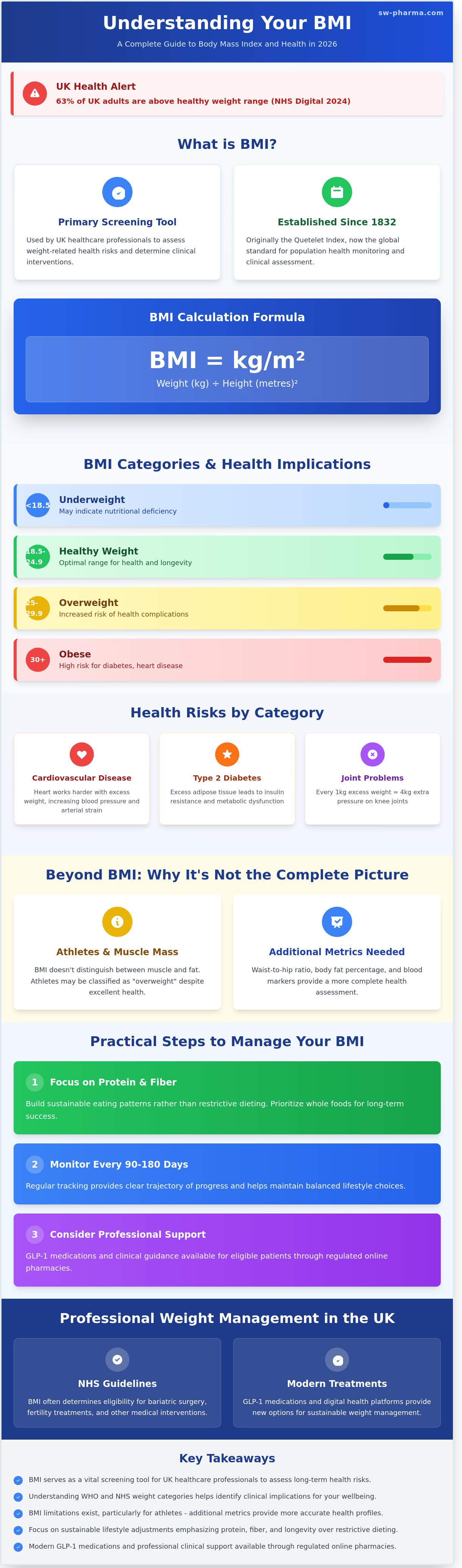
Body Mass Index, commonly referred to as bmi, represents a numerical value derived from an individual's mass and height. It's defined as the body mass divided by the square of the body height. This metric serves as a primary screening tool for healthcare professionals across the United Kingdom. While it's not a direct measurement of body fat percentage, the Body Mass Index (BMI) provides a reliable indicator of potential weight-related health issues for most adults. In clinical settings, it correlates strongly with metabolic health markers, including insulin sensitivity and cardiovascular strain.
UK General Practitioners use this value to categorise patients into four main weight ranges: underweight, healthy weight, overweight, or obese. It's a vital first step in identifying individuals who might be at an increased risk of developing chronic conditions like Type 2 diabetes or hypertension. By 2026, despite the emergence of more complex diagnostic tools, this ratio remains the global standard. It's simple, non-invasive, and cost-effective for large-scale public health monitoring. It allows for a rapid assessment that helps clinicians decide if further diagnostic tests, such as blood lipid profiles or waist-to-hip ratio measurements, are necessary.
The History and Purpose of the BMI Scale
The origins of this scale date back to 1832, when it was developed by the Belgian mathematician Adolphe Quetelet. Originally termed the Quetelet Index, it was designed to define the "average man" through statistical analysis. Modern medicine adopted this framework because population-level data allows researchers to track health trends across decades. In the UK, your score often determines eligibility for specific medical interventions. For instance, the NHS frequently requires a specific range for access to bariatric surgery or certain fertility treatments, ensuring that clinical outcomes are optimised based on patient safety profiles. It's a gateway metric that helps standardise care protocols across the healthcare system.
How to Calculate Your BMI Manually
Calculating your score manually is a straightforward process using the metric system. You take your weight in kilograms and divide it by your height in metres squared (kg/m²). Accuracy is essential here. You should use recent measurements taken on a calibrated scale and a professional height rod. Even a small discrepancy in height can shift your classification. If you're looking to adjust your weight based on these results, integrating a calorie calculator into your routine helps manage the energy balance required for sustainable change. Monitoring these figures every 90 to 180 days provides a clear trajectory of your physiological progress and helps you maintain a balanced lifestyle.
BMI Categories: What Your Score Means for Your Health
Your bmi result isn't just a random number on a screen; it's a clinical tool used by the NHS to screen for potential health risks. By mapping your mass against your height, this metric provides a baseline for understanding how your weight might be affecting your internal systems. It's a starting point for a deeper conversation about your physiological wellbeing and long-term vitality.
The BMI Classification Table
The World Health Organization (WHO) uses a standardised scale to categorise adults. These brackets are designed to highlight when a person's weight deviates from the statistical norm for their height. The current UK guidelines follow these specific ranges:
- Underweight: BMI below 18.5
- Healthy Weight: BMI 18.5 to 24.9
- Overweight: BMI 25 to 29.9
- Obese: BMI 30 or higher
Associated Health Risks by Category
Clinical data from 2024 shows that falling into the overweight or obese categories significantly increases the likelihood of metabolic complications. When your bmi exceeds 25, your heart has to work harder to pump blood through a larger body mass. This often leads to hypertension and increased arterial strain. You can refer to our blood pressure chart to understand how these two metrics often climb in tandem.
High scores are also primary drivers for Type 2 diabetes. Excess adipose tissue, particularly around the midsection, can lead to insulin resistance. Beyond metabolic issues, the physical strain is substantial. For every 1kg of additional weight, your knees experience 4kg of extra pressure during daily activities. This cumulative stress frequently results in chronic joint pain and reduced respiratory efficiency, as the lungs must work harder to oxygenate the body.
The risks of an underweight bmi are often overlooked in public health discussions, yet they're equally serious. A score below 18.5 may suggest that your body isn't receiving the essential nutrients required for optimal function. This can lead to a compromised immune system, making it harder to recover from simple seasonal illnesses. For many, it also results in decreased bone density and a higher risk of osteoporosis in later life.
Health professionals view a "Healthy Weight" as a range rather than a single, rigid figure. This flexibility accounts for small variations in bone density and muscle mass. The NHS and major global bodies utilise these healthy weight ranges to help patients find a sustainable balance that supports longevity. Staying within the 18.5 to 24.9 bracket is statistically linked to a lower incidence of chronic disease and improved quality of life.
Achieving your target range requires a commitment to both nutrition and metabolic support. You might consider browsing our scientifically formulated supplements to ensure your body has the micronutrients it needs while you work toward your health goals.
Beyond the Number: Why BMI Isn't the Only Measure of Health
While the bmi provides a reliable baseline for the general population, it remains an incomplete diagnostic tool. It fails to distinguish between lean tissue and adipose tissue. This oversight creates the "athlete paradox." A 2024 study published in the International Journal of Obesity found that nearly 50% of people classified as "overweight" by their bmi score actually possessed healthy metabolic profiles. The calculation doesn't account for where fat is stored, which is a critical factor in disease prevention.
Clinical experts increasingly recommend the waist-to-height ratio (WHtR) as a superior predictor of cardiovascular risk. You should aim to keep your waist circumference to less than half your height. A 2022 meta-analysis involving over 300,000 participants confirmed that WHtR is more effective than traditional metrics at identifying risks like Type 2 diabetes and hypertension. This happens because visceral fat, which accumulates around internal organs, is metabolically more active and dangerous than subcutaneous fat found just beneath the skin. A holistic view of health must include:
- Cardiovascular fitness levels and resting heart rate
- Nutritional density and dietary balance
- Mental well-being and sleep quality
- Blood pressure and cholesterol markers
The Impact of Muscle Mass and Bone Density
Muscle is approximately 18% denser than fat. This means a professional rugby player with a 10% body fat percentage might register an "Obese" score of 31.0. Conversely, bone density decreases by roughly 1% per year after the age of 40. This can lead to "skinny fat" phenotypes where the result appears normal despite high internal fat levels. If your activity levels are high but your results seem skewed, seek a Dual-Energy X-ray Absorptiometry (DEXA) scan for precise body composition data.
Demographic Nuances: Age, Gender, and Ethnicity
Standard ranges don't apply 100% of the time. The World Health Organisation (WHO) identifies that individuals of South Asian, Chinese, and Japanese descent face higher metabolic risks at lower weights. For these groups, the "overweight" threshold often starts at 23.0 rather than 25.0. For adults over 65, a slightly higher range between 25 and 27 can actually be protective against frailty and bone fractures. For children, clinicians don't use fixed ranges. They use centile charts to compare growth against 1990 UK reference data, as their bodies change rapidly during puberty.
True health is a synergy of various physiological factors. Don't let a single number define your progress. Use it as one of many data points in your long-term wellness strategy.
Practical Steps to Manage Your BMI and Improve Longevity
Managing your bmi effectively requires a departure from the "crash diet" culture that often leads to weight cycling. Research published in the British Journal of Nutrition indicates that 80% of individuals who lose weight through restrictive dieting regain it within two years. Longevity is built on sustainable, incremental adjustments to your daily habits rather than temporary deprivation. This clinical approach ensures your body remains nourished while you work toward a healthier weight range.
Developing a Sustainable Nutritional Strategy
Understanding your energy requirements is the foundational step in any weight management plan. You can use a calorie calculator to find your maintenance calories, which provides a baseline for a controlled deficit. Aim for a modest 10% to 15% reduction in daily intake to ensure the pace of weight loss is manageable. High protein intake, ideally 1.6g per kg of body weight, and at least 30g of fibre daily are essential. These nutrients improve satiety and support metabolic health. Tracking macronutrients helps ensure you're targeting fat stores while preserving lean tissue, which is vital for long-term success.
- Protein: Supports muscle repair and increases the thermic effect of food.
- Fibre: Regulates blood sugar levels and promotes gut microbiome diversity.
- Micronutrients: Ensure you're getting sufficient Vitamin D and Magnesium to support metabolic pathways.
The Role of Physical Activity in BMI Reduction
Exercise should be viewed through two distinct lenses to maximise efficiency. Non-Exercise Activity Thermogenesis (NEAT) includes walking to the shops or taking the stairs. This can account for up to 15% of your total energy expenditure. Increasing your daily step count from 5,000 to 10,000 can significantly impact your energy balance without the stress of high-intensity workouts. Planned exercise should combine cardiovascular health with resistance training.
Lifting weights at least twice a week prevents the muscle wastage often seen during weight loss. Since muscle tissue is more metabolically active than fat, increasing your muscle mass raises your Basal Metabolic Rate (BMR). This means your body burns more energy even at rest. A balanced programme ensures you're improving your bmi while simultaneously strengthening your skeletal system and heart.
Consulting a registered pharmacist offers a layer of clinical safety that DIY plans lack. They can review your current medications and suggest evidence-based supplements that support your metabolic goals without compromising your health. Professional guidance ensures your journey is backed by science and tailored to your specific physiological needs.
Take the next step in your health journey by exploring our range of professional health solutions. Discover SW Pharma's premium health supplements for evidence-based support.
Professional Weight Management and Clinical Support in the UK
Achieving a healthy weight isn't always a matter of willpower. Many individuals find that diet and exercise alone don't produce the metabolic shifts required for long-term success. This is where a regulated online pharmacy London provides a bridge between clinical expertise and patient accessibility. In the UK, medical weight loss is strictly governed by NICE guidelines to ensure patient safety. Eligibility for prescription treatment typically requires a bmi of 30 or higher. Alternatively, a bmi of 27 or higher is accepted if you have weight-related health conditions like hypertension or type 2 diabetes. These thresholds ensure that medication is reserved for those who'll benefit most from clinical intervention under professional supervision.
Understanding Modern Weight Loss Medications
The landscape of weight management changed significantly with the introduction of GLP-1 receptor agonists. Medications like Wegovy and Mounjaro mimic naturally occurring hormones such as glucagon-like peptide-1. They slow gastric emptying and signal the brain to feel full sooner, effectively silencing "food noise." Clinical trials showed that patients using these treatments could lose up to 15% to 22.5% of their body weight over 68 to 72 weeks. For those who prefer oral treatments, Xenical prevents the absorption of about one-third of dietary fat within the digestive tract. Meanwhile, Mysimba targets the reward system in the brain to reduce cravings. These tools are most effective as part of a structured programme including calorie reduction and increased physical activity.
How to Access a Clinical Consultation
Safety remains our priority at SW Pharma. Accessing treatment begins with a comprehensive digital clinical assessment. You'll need to provide accurate measurements of your height and weight. Being honest here is vital; clinicians use these figures to determine if a prescription is safe for your specific physiology. Once approved, you aren't left to manage alone. Our licensed pharmacists provide ongoing support to monitor side effects and progress. This ensures that your journey towards a healthier weight is both medically supervised and sustainable. We adhere to the highest standards set by the General Pharmaceutical Council (GPhC) to ensure every patient receives legitimate, UK-licensed medication. This clinical oversight is essential for managing the transition to a healthier lifestyle safely.
- Clinical Assessment: Every patient undergoes a thorough review of their medical history.
- Regulated Supply: All medications are dispensed from a GPhC-registered pharmacy.
- Ongoing Guidance: Direct access to pharmacists for dosage adjustments and support.
Taking Proactive Steps Toward Your Long-term Health
Your bmi score serves as a fundamental clinical baseline, yet it's only the start of a comprehensive health assessment. Understanding your weight range helps identify potential risks for metabolic conditions, but true wellness involves looking at body composition and lifestyle factors. Data from the NHS indicates that losing just 5% of your initial body weight can significantly lower blood pressure and improve heart health. It's about finding a sustainable balance that supports your longevity through 2026 and beyond.
Professional support makes a measurable difference in maintaining these results. As a GPhC Registered Pharmacy, SW Pharma connects you with UK Licensed Prescribers who understand the complexities of weight management. We provide a secure, medically supervised environment with the added benefit of discreet national delivery. You don't need to struggle with weight goals in isolation when expert clinical guidance is available at your fingertips.
Start your free clinical weight loss assessment with SW Pharma today
Investing in your health is the most important decision you'll make this year, and we're here to support every step of your transformation.
Frequently Asked Questions
Is BMI an accurate measure for everyone?
BMI isn't a perfect diagnostic tool because it doesn't differentiate between muscle mass and adipose tissue. A 2023 study suggests that 18% of adults are misclassified by this metric alone. Athletes often find their bmi falls into the "overweight" category despite having low body fat percentages. It's better to use this figure as a starting point rather than a definitive health verdict.
What is a healthy BMI for a woman versus a man?
The healthy range for both men and women is technically between 18.5 and 24.9. However, physiological differences mean women naturally carry 10% to 13% essential body fat, while men require only 2% to 5%. Because men generally possess higher bone density and muscle mass, a man and a woman with the same bmi will have very different body compositions.
How often should I check my BMI?
Checking your weight and height once every six months is sufficient for most healthy adults. Frequent daily or weekly monitoring often leads to unnecessary anxiety and doesn't reflect long term health trends. The NHS recommends a formal review during your NHS Health Check, which occurs every five years for those aged 40 to 74 to monitor cardiovascular risk.
Can I have a "healthy" BMI and still be unhealthy?
Yes, you can have a normal weight but still possess high levels of internal visceral fat. This condition, often called "normal weight obesity," affects roughly 25% of the population according to Mayo Clinic data. These individuals may face the same risks for Type 2 diabetes and heart disease as those in higher weight categories due to poor metabolic health and low muscle density.
What is the quickest way to lower my BMI safely?
The safest approach is aiming for a sustainable weight loss of 0.5kg to 1kg per week. You can achieve this by maintaining a consistent 500 calorie daily deficit combined with 150 minutes of moderate activity weekly. Attempting to lose more than 1.5kg every seven days increases your risk of gallstones by 30% and often leads to significant muscle loss rather than fat reduction.
Does the NHS still use BMI to diagnose obesity?
The NHS continues to use BMI as the primary screening tool for weight related health issues. Current NICE guidelines define a score of 30 or above as obese and 25 to 29.9 as overweight. GPs now frequently use this alongside a waist-to-height ratio. They recommend your waist circumference should be less than half your height to ensure you aren't carrying dangerous levels of midsection fat.
What BMI do I need to qualify for weight loss injections in the UK?
You generally require a BMI of 30 or above to access weight loss injections like Wegovy or Mounjaro through private clinics or the NHS. If you have a co-morbidity like hypertension or Type 2 diabetes, the threshold usually drops to 27. Private treatment costs in the UK currently range from £150 to £290 per month depending on the specific medication and required dosage.
Why is BMI different for South Asian or Black ethnic groups?
Different ethnic groups carry metabolic risks at lower weight thresholds than white Europeans. NICE guidelines updated in 2022 recommend that South Asian, Chinese, and Middle Eastern groups use a lower "overweight" threshold of 23. This change exists because these populations face a 2.5 times higher risk of developing Type 2 diabetes at what is typically considered a "normal" weight.
![Wegovy Side Effects Management: A Clinical Guide for UK Patients [2026]](https://getautoseo.com/storage/hero_images/article_665463_1776498695.jpg)
![Wegovy vs Saxenda for Weight Loss: A Clinical Comparison for UK Patients [2026]](https://getautoseo.com/storage/hero_images/article_1261167_1776484316.jpg)