
![Wegovy vs Saxenda for Weight Loss: A Clinical Comparison for UK Patients [2026]](https://getautoseo.com/storage/hero_images/article_1261167_1776484316.jpg)
Is it possible that the less frequent treatment is actually the more powerful option for your biology? Many patients assume a daily routine offers tighter control over cravings, but clinical data from the STEP 1 and SCALE trials highlights a 12.4% difference in average weight loss between these two leading GLP-1 medications. When evaluating wegovy vs saxenda for weight loss, the choice isn't just about how often you use a pen; it's about how semaglutide and liraglutide interact with your body's unique hunger signals.
We understand that the UK's fluctuating medication supply and the complexity of dosing schedules can feel overwhelming when you're already juggling a busy career or family life. You've likely felt the frustration of slow results from traditional methods and want a solution that actually lasts. This guide provides a clinical breakdown of the latest 2026 medical insights on efficacy, side effect management, and UK-specific availability. We'll compare these treatments so you can confidently choose a path that leads to significant, sustainable weight loss and a more balanced, energetic lifestyle.
Key Takeaways
- Understand how GLP-1 receptor agonists mimic natural metabolic hormones to regulate satiety and delay gastric emptying for sustainable appetite control.
- Compare the clinical outcomes of wegovy vs saxenda for weight loss by examining results from the STEP and SCALE trials to determine which treatment offers superior percentage-based results.
- Learn how to manage common gastrointestinal side effects and why a structured titration schedule is essential for minimizing discomfort during the early stages of treatment.
- Evaluate practical lifestyle factors, including the convenience of weekly versus daily dosing and the logistics of traveling with temperature-sensitive medication pens.
- Discover the regulated process for safely accessing these prescription medications online through GPhC-compliant clinical assessments that prioritize your long-term health and suitability.
Understanding GLP-1 Receptor Agonists: How Wegovy and Saxenda Work
Glucagon-like Peptide-1 (GLP-1) is a metabolic hormone produced naturally in the small intestine. Its primary role involves regulating blood sugar levels and signaling the brain to register fullness after a meal. While the body's natural GLP-1 degrades within minutes, GLP-1 receptor agonists are synthetic versions designed to remain active in the system for much longer periods. These medications have evolved significantly since the first GLP-1 analogue, exenatide, was approved for Type 2 diabetes in 2005. Today, they represent a frontline clinical approach for chronic weight management in the UK.
The core mechanism of these treatments involves delayed gastric emptying. This process slows the rate at which food leaves the stomach and enters the small intestine. By extending the time food remains in the digestive tract, the medication provides a physical sensation of prolonged satiety. This physiological change makes it easier for patients to adhere to a reduced-calorie diet without the intense hunger pangs that often lead to weight loss plateaus. When considering wegovy vs saxenda for weight loss, patients should understand that while both target the same receptors, their molecular structures dictate how often they must be administered.
Semaglutide vs Liraglutide: The Molecular Difference
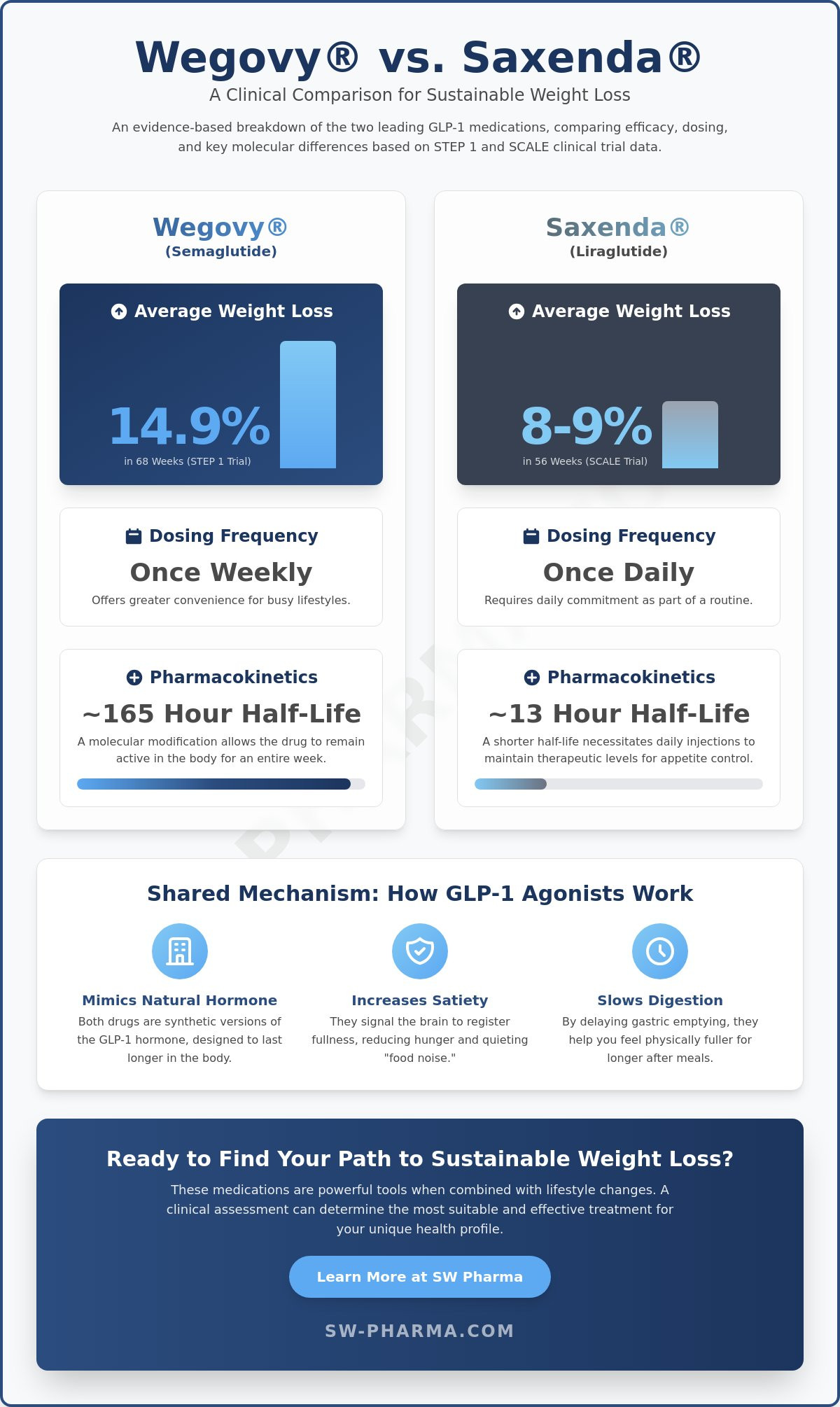
Semaglutide, the active ingredient in Wegovy, features a specific molecular modification that makes it highly resistant to the DPP-4 enzyme, which usually breaks down GLP-1. This engineering results in a half-life of approximately 165 hours. Because the drug stays in the bloodstream so long, patients only require one subcutaneous injection per week. In contrast, liraglutide, the active ingredient in Saxenda, has a much shorter half-life of roughly 13 hours. This necessitates a daily injection to maintain the steady-state concentration required for effective appetite suppression. Both medications are manufactured by Novo Nordisk, yet they serve different clinical profiles based on a patient's lifestyle and tolerance for daily versus weekly dosing schedules.
The Role of Appetite Suppression in Weight Management
A central benefit of these treatments is the reduction of "food noise." This term describes the constant, intrusive thoughts about eating that many individuals with obesity experience. By quietening these neurological signals, wegovy vs saxenda for weight loss allows patients to make conscious, rational nutritional choices. It's vital to recognize that these aren't quick fixes or "fat burners" in the traditional sense. They're clinical tools for chronic weight management. Clinical data consistently shows that the best outcomes occur when these medications are used as a foundation alongside a calorie-controlled diet and increased physical activity. They don't replace healthy habits; they provide the biological environment where those habits can finally take root and produce sustainable results.
Clinical Effectiveness: Comparing Weight Loss Results and Dosing Schedules
Understanding the clinical foundation of wegovy vs saxenda for weight loss requires a close look at two major clinical programs: the STEP trials for semaglutide and the SCALE trials for liraglutide. These studies provide the evidence base for how these GLP-1 receptor agonists perform in real-world scenarios. In the STEP 1 clinical trial, participants using Wegovy achieved an average weight reduction of 14.9% over a 68-week period. In contrast, the SCALE obesity and prediabetes trial demonstrated that patients using Saxenda lost an average of 8% to 9% of their body weight over 56 weeks.
Both medications utilize a titration schedule to ensure patient safety and comfort. This gradual increase helps the digestive system adapt to the hormone-mimicking effects of the drugs. The NICE guidelines for Wegovy specify that patients should typically have a BMI of at least 35, or 30 with weight-related comorbidities, to qualify for treatment under NHS protocols. This structured approach ensures that the high potency of semaglutide is managed effectively from the initial 0.25mg dose up to the 2.4mg maintenance level. Saxenda follows a faster titration, moving from 0.6mg to 3.0mg in weekly increments, which requires daily commitment from the patient.
Wegovy: The Weekly Powerhouse
Wegovy represents a significant shift in weight management technology due to its extended half-life. Patients inject the medication once every seven days, which significantly improves long-term compliance compared to daily alternatives. By 2026, the UK supply chain for Wegovy has matured, providing more consistent access for patients seeking this high-efficacy treatment. Its ability to maintain stable plasma concentrations with a weekly 2.4mg dose is a primary reason for the superior 15% weight loss outcomes observed in clinical settings. This stability reduces the "peaks and troughs" of medication levels in the bloodstream.
Saxenda: Daily Flexibility and Control
While Wegovy offers convenience, Saxenda remains a vital tool for those who require more granular control over their treatment. Because Saxenda is administered daily, the active ingredient, liraglutide, leaves the system much faster. This allows a clinician to pause or adjust the 0.6mg to 3.0mg scale quickly if side effects become unmanageable. Although the average weight loss is lower, ranging from 8% to 9%, Saxenda provides a flexible entry point into metabolic health. The UK supply landscape for liraglutide has faced challenges since 2023; therefore, it's essential to consult with a specialist provider to confirm current availability before starting a cycle.
Managing Side Effects and Patient Safety
Side effect management is a clinical priority that requires ongoing pharmacist consultation to ensure patient safety. When evaluating wegovy vs saxenda for weight loss, it's essential to understand that both medications influence the gastrointestinal system as they mimic the GLP-1 hormone. Clinical data shows that nausea is the most reported issue, affecting approximately 44% of Wegovy users and a similar proportion of those on Saxenda. Other common experiences include acid reflux and constipation, which result from the slowed gastric emptying process these drugs induce.
Most symptoms peak during the titration phase. This is the period where your dose increases incrementally every four weeks for Wegovy, or every week for Saxenda. This gradual escalation is designed to build metabolic tolerance. While common side effects are usually transient, rare but serious risks exist. Acute pancreatitis has been observed in less than 1% of patients in clinical trials. Similarly, gallbladder issues like cholelithiasis may occur, often linked to the rapid rate of weight loss itself rather than the specific compound.
Mitigating Nausea and Digestive Discomfort
Managing the transition to these medications involves practical lifestyle adjustments. You can reduce digestive strain by adopting these habits:
- Eat smaller, more frequent meals instead of three large ones.
- Maintain hydration by drinking at least two litres of water daily.
- Avoid high-fat or heavily processed foods that can exacerbate nausea.
- Stop eating as soon as you feel full to prevent overdistension of the stomach.
It's important to distinguish between mild adjustment pains and red flags. While mild nausea is expected, severe abdominal pain that radiates to your back is a reason to seek immediate medical advice. Your prescriber plays a vital role here; if side effects become unmanageable, they can adjust your titration schedule, allowing you to remain on a lower dose for an additional 4 week cycle to improve tolerability.
Contraindications: Who Should Avoid These Treatments?
Not every patient is a suitable candidate for GLP-1 therapy. Clinical guidelines strictly prohibit use in patients with a personal or family history of Medullary Thyroid Carcinoma (MTC) or Multiple Endocrine Neoplasia syndrome type 2 (MEN 2). These conditions are rare, but the safety protocols are absolute to prevent complications. When choosing between wegovy vs saxenda for weight loss, your underlying health status remains the primary deciding factor.
Patients with a history of chronic pancreatitis or severe kidney disease must proceed with extreme caution or avoid these treatments entirely. During your SW Pharma consultation, providing a transparent medical history is the most critical step in the process. We evaluate your renal function and previous surgical history to ensure that the chosen weight loss pathway supports your long-term vitality without compromising organ health.
Making the Choice: Lifestyle Factors and Switching Medications
Selecting the right GLP-1 receptor agonist involves more than comparing clinical trial data. For most UK patients, the decision between wegovy vs saxenda for weight loss hinges on how the treatment integrates with their daily routine, travel habits, and long-term budget. It's about finding a balance between medical efficacy and the practicalities of living with a chronic condition.
Logistically, Wegovy offers a clear advantage for frequent travellers. A single Wegovy pen contains four doses, covering an entire month, whereas Saxenda requires five pens for a 30-day supply at the full 3.0 mg dose. Both medications require cold-chain storage before first use, but they can remain at room temperature (up to 30°C) for approximately 30 days once opened. Managing sharps disposal is also simpler with Wegovy. It involves 52 injections per year compared to the 365 required by Saxenda. This reduction in needle frequency often alleviates the psychological burden of treatment, particularly for those who don't enjoy the process of self-injection.
When evaluating cost-effectiveness over a six-month period, Wegovy typically proves more economical despite its higher per-pen price. This happens because the titration schedule for Saxenda involves increasing the dose every week, leading to higher pen consumption. If neither of these options aligns with your metabolic needs, you might consider Mounjaro for Weight Loss, which utilizes a dual-action mechanism and a weekly dosing schedule similar to Wegovy.
The Switching Protocol: Moving from Saxenda to Wegovy
Patients often consider transitioning when weight loss plateaus or when they experience "injection fatigue." Clinical protocols for switching vary. Some clinicians recommend a "washout period" of 48 to 72 hours after the last Saxenda dose before starting Wegovy at the lowest 0.25 mg dose. Others may allow a direct transition if the patient tolerated Liraglutide well. You must never switch medications without a fresh clinical assessment. It's vital to ensure your heart rate and gastrointestinal health are stable enough for the change. Switching wegovy vs saxenda for weight loss requires a tailored plan to manage potential side effects during the transition.
Lifestyle Compatibility Checklist
- Dosing Frequency: Wegovy is ideal for busy professionals who prefer a "set and forget" weekly routine. Saxenda suits those who feel more secure with a daily habit that reinforces their commitment to weight management.
- Social and Dining Habits: Both medications slow gastric emptying. On GLP-1 therapy, you'll need to adjust your approach to social dining, focusing on smaller portions and avoiding high-fat foods that trigger nausea.
- Storage: While both require refrigeration, carrying one pen for a two-week holiday is significantly easier than packing multiple pens and a larger supply of needles.
Safe Access to Weight Loss Treatment via SW Pharma
Choosing between wegovy vs saxenda for weight loss involves more than just comparing clinical trials. It requires a safe, regulated environment to ensure the chosen therapy aligns with your unique physiology. SW Pharma operates as a GPhC-regulated pharmacy, which means every step of your journey follows strict UK healthcare standards. We don't view ourselves as a simple supplier; we act as a professional partner in your metabolic health journey. Our goal is to provide the clinical precision you need to achieve lasting results.
Our online clinical assessment is the cornerstone of patient safety. You'll provide detailed information regarding your current BMI, existing medical conditions, and any concurrent medications. Our clinical team reviews these details to confirm suitability. This process prevents the risks associated with self-diagnosis. It ensures that your weight loss strategy is both effective and sustainable. By verifying your medical history against established protocols, we maintain the highest levels of patient care in the digital space.
Logistics matter when handling biological medications. Both semaglutide and liraglutide require strict temperature controls to maintain their molecular integrity. SW Pharma utilizes discreet, temperature-controlled packaging that keeps your medication within the required 2°C to 8°C range throughout the UK delivery network. You'll receive your treatment in a secure, unbranded package. This maintains your privacy while ensuring the product's efficacy remains uncompromised from our pharmacy to your doorstep.
Why Clinical Oversight Matters
Access to licensed pharmacists is a standard part of our service. If you experience common side effects like nausea or fatigue, our team provides evidence-based advice to help you stay on track. You should strictly avoid "unbranded" or "black market" semaglutide often found on unregulated websites. The MHRA issued specific warnings in 2023 and 2024 regarding counterfeit pens that can be dangerous. SW Pharma guarantees 100% authentic, UK-licensed medications sourced directly from legitimate manufacturers, ensuring your safety at every stage.
Starting Your Journey Today
The process is streamlined for your convenience through these steps:
- Complete our comprehensive online medical questionnaire.
- Wait for a qualified prescriber to review your clinical data.
- Once approved, your medication is dispensed by our UK pharmacy.
- Receive your package via tracked, temperature-controlled delivery.
Your first delivery contains everything needed to begin, including the medication pens, needles, and a sharps bin for safe disposal. For a deeper look at the UK landscape and what to expect during your first month, read our Wegovy in the UK: The Comprehensive 2026 Guide. We're here to support your transition to a healthier lifestyle with professional expertise you can trust.
Your Next Steps Toward Sustainable Weight Management
Navigating the clinical choice of wegovy vs saxenda for weight loss requires a balance of peer-reviewed evidence and your personal lifestyle needs. Data from the 2021 STEP 1 clinical trial showed that semaglutide patients achieved a 14.9% mean weight reduction over 68 weeks. Conversely, the SCALE obesity trial indicated an 8% weight loss for liraglutide users after 56 weeks. While Wegovy's once-weekly dosing offers convenience, Saxenda's daily administration allows for immediate adjustments if you're sensitive to the medication.
Safety remains the priority. As a GPhC Registered Pharmacy, SW Pharma provides a secure environment to explore these options. Every patient receives a free clinical review by licensed prescribers to ensure the treatment aligns with their medical history. Once approved, your medication is sent via discreet UK-wide home delivery to maintain your privacy.
Start your free weight loss consultation with SW Pharma
Taking control of your metabolic health is a significant milestone. With the right clinical support and a treatment plan tailored to your biology, achieving a healthier future is a reachable goal.
Frequently Asked Questions
Can I switch from Saxenda to Wegovy immediately?
You can switch from Saxenda to Wegovy, but it’s essential to follow a specific clinical protocol to ensure safety. Most clinicians recommend waiting at least 24 hours after your last liraglutide dose before starting semaglutide at the 0.25 mg introductory level. This transition period ensures the daily medication leaves your system before the weekly injection begins. It prevents an overlap that could increase the intensity of gastrointestinal side effects during your first week.
Is Wegovy more effective than Saxenda for everyone?
Wegovy is statistically more effective for the average patient, though individual metabolic responses can differ. In the STEP 8 clinical trial, participants using Wegovy achieved a 15.8% reduction in body weight compared to 6.4% for those using Saxenda. When evaluating wegovy vs saxenda for weight loss, these figures suggest that the once-weekly semaglutide molecule offers a more potent biological response for appetite suppression and glycemic control than daily liraglutide.
What happens if I miss a dose of my weight loss injection?
If you miss a dose, your course of action depends on which medication you're using and how much time has passed. For Wegovy, take the missed dose if your next scheduled injection is more than 48 hours away. For Saxenda, skip the dose if more than 12 hours have passed since your usual time. If you don't take your dose for more than 3 consecutive days, contact your prescriber to discuss restarting.
Can I drink alcohol while taking Wegovy or Saxenda?
You can drink alcohol while using these medications, but it’s important to understand the metabolic risks involved. Alcohol can lower your blood sugar levels and exacerbate nausea, a side effect reported by 44% of patients in clinical trials. Since alcohol contains empty calories, it can also slow your overall progress. Limiting intake to 1 or 2 units occasionally helps maintain your energy balance and reduces the strain on your digestive system.
Are these weight loss injections available on the NHS?
Both medications are available on the NHS, but access is restricted to specific patient groups. NICE guidelines state that Wegovy is typically reserved for individuals with a BMI of 35 or higher who have at least one weight-related health condition, such as type 2 diabetes or hypertension. You must usually access these treatments through a Tier 3 or Tier 4 specialist weight management service rather than a standard GP appointment.
How long can I stay on Wegovy or Saxenda for weight maintenance?
Clinical guidelines suggest these medications are for long-term use to treat obesity as a chronic condition. The STEP 4 clinical trial showed that patients who transitioned to a placebo after 20 weeks regained weight, while those who stayed on the medication continued to see improvements. Most UK providers follow a treatment plan that lasts at least 2 years, provided you achieve a 5% weight loss within the first 16 weeks.
Will I regain weight if I stop taking GLP-1 medications?
Research shows that many patients regain weight after stopping GLP-1 medications if they haven't established permanent lifestyle habits. A study published in the Diabetes, Obesity and Metabolism journal found that participants regained two-thirds of their lost weight one year after stopping semaglutide. This occurs because the medication’s appetite-suppressing effects disappear once the active ingredient leaves your bloodstream. Success depends on using the treatment period to recalibrate your metabolic health and eating patterns.
Which is cheaper: Wegovy or Saxenda?
Saxenda usually carries a higher monthly cost for private patients because it requires 30 daily doses per month compared to 4 weekly doses for Wegovy. While we don't set retail prices, data from the British National Formulary indicates that the daily administration of liraglutide requires more physical pens to complete a standard 30-day cycle. When comparing wegovy vs saxenda for weight loss, the weekly format of Wegovy often proves more cost-effective for long-term treatment plans.
![Tadalafil vs Sildenafil Effectiveness: A UK Clinical Comparison [2026]](https://getautoseo.com/storage/hero_images/article_681719_1776514276.jpg)
![Wegovy Side Effects Management: A Clinical Guide for UK Patients [2026]](https://getautoseo.com/storage/hero_images/article_665463_1776498695.jpg)