

What if the persistent hunger that derails your progress isn't a lack of willpower, but a physiological signal that requires clinical recalibration? You've likely spent years following restrictive regimes, only to find that even with treatments like Saxenda, the path to sustainable health feels clouded by conflicting information. It's incredibly frustrating to feel like you're fighting your own biology when 64% of adults in England are currently managing similar weight-related challenges.
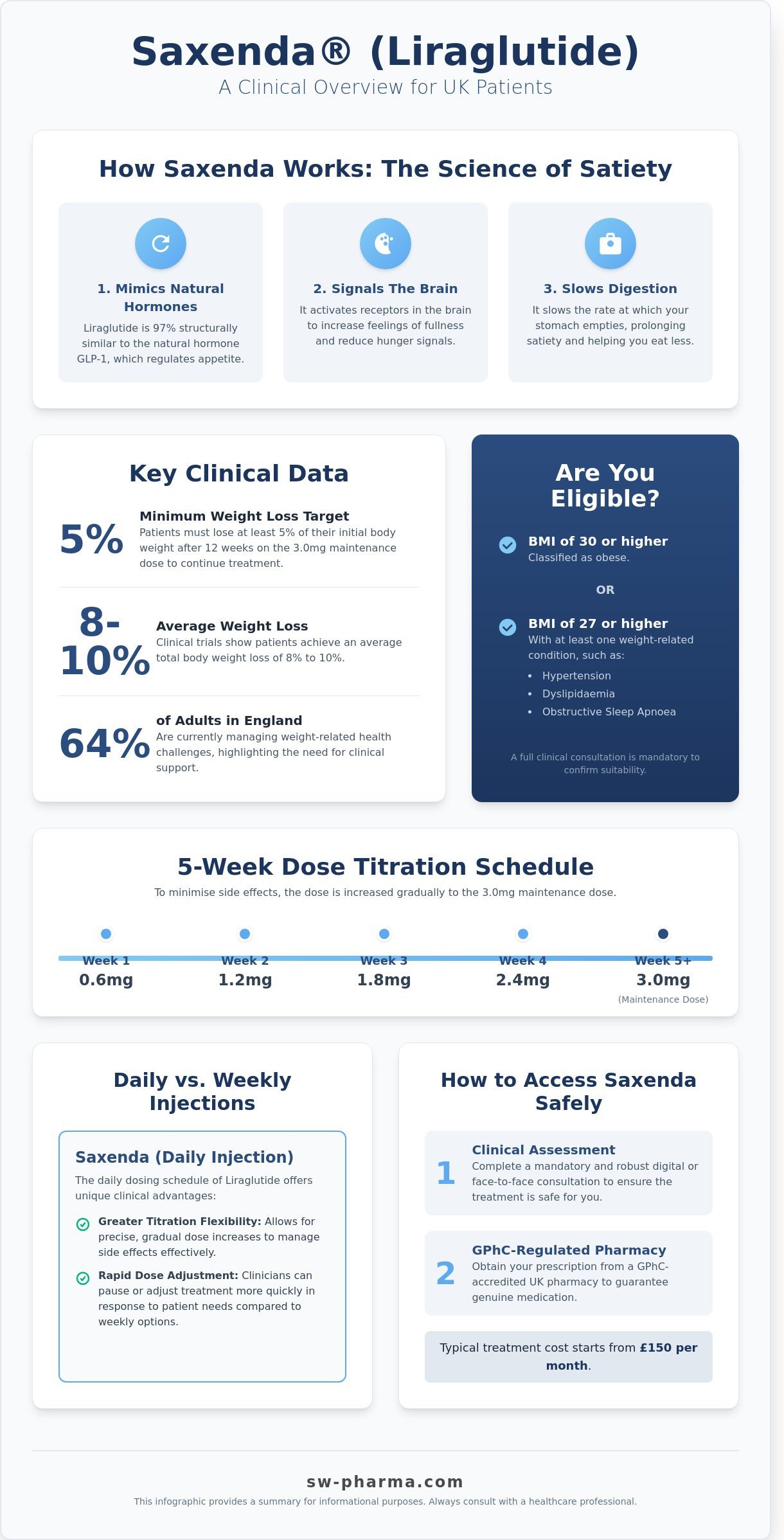
This guide demonstrates how liraglutide mimics naturally occurring hormones to help patients achieve a clinical weight reduction of at least 5% within the first 12 weeks. We'll break down the latest 2026 safety protocols and explain how to manage potential side effects. Finally, we'll outline the steps for securing a private prescription through a GPhC-regulated UK pharmacy, where treatment costs typically start from £150 per month. You'll gain a clear, evidence-based roadmap for your journey, moving past the confusion of 'weight loss jabs' toward a sustainable solution that fits your life.
Key Takeaways
- Understand the clinical mechanism of Liraglutide and how it mimics natural hormones to regulate appetite and prolong the feeling of fullness.
- Discover the unique benefits of daily administration, offering greater titration flexibility and dose control compared to weekly alternatives.
- Learn the essential 5-week titration schedule required to safely reach the 3.0mg maintenance dose while minimising potential side effects.
- Find out how to safely access genuine saxenda in the UK through a regulated clinical assessment with a GPhC-accredited pharmacy.
What is Saxenda? Understanding the Role of Liraglutide in 2026
Saxenda is a prescription-only medication licensed for chronic weight management in the United Kingdom. It belongs to a class of drugs known as GLP-1 receptor agonists, which were originally developed to treat type 2 diabetes. The active ingredient, Liraglutide (Saxenda), works by mimicking a naturally occurring hormone in the body that signals the brain when you're full. By activating these specific receptors, it slows gastric emptying and reduces the constant "food noise" that often derails traditional dieting efforts.
The history of saxenda in the UK is significant, as it was the first injectable weight loss treatment to receive widespread clinical approval. Following its NICE (National Institute for Health and Care Excellence) approval in October 2020, it transformed the landscape of obesity treatment in London and across the country. While newer weekly injections have since entered the market, this daily treatment remains a staple of clinical practice in 2026. Its daily dosing schedule offers a unique level of control, allowing clinicians to adjust or pause treatment more rapidly than with weekly alternatives if a patient's response requires fine-tuning.
The Clinical Criteria for UK Patients
Accessing weight loss medication in the UK is governed by strict safety protocols. To be eligible for a prescription, a patient must typically have a Body Mass Index (BMI) of 30 kg/m² or higher. However, if you live with weight-related comorbidities such as hypertension, dyslipidaemia, or obstructive sleep apnoea, the threshold is lowered to 27 kg/m². Under UK law, a face-to-face or robust digital clinical consultation is mandatory to ensure the treatment is safe for your specific medical profile.
A vital component of the treatment plan is the "12-week rule." Clinical guidelines dictate that patients must be reviewed after 12 weeks of maintaining the maximum 3.0 mg daily dose. If you haven't lost at least 5% of your initial body weight by this point, the medication is usually discontinued. This ensures that patients only continue with the treatment if it's proving biologically effective for their specific metabolic makeup.
Saxenda vs. Traditional Weight Loss Methods
Many patients find that willpower alone fails because weight loss triggers a biological "survival mode" where hunger hormones like ghrelin increase significantly. Saxenda addresses this biological hurdle by stabilising appetite signals. Unlike traditional calorie-restricted diets that can lead to a "mental fog" or constant preoccupation with the next meal, this pharmacological support allows patients to focus on nutritional quality without the distraction of intense hunger pangs.
- Biological Support: It dampens the physiological drive to overeat, making a 500-calorie deficit feel manageable rather than restrictive.
- Sustainable Habits: The medication acts as a tool to facilitate lifestyle changes, not a "magic bullet" that works without dietary adjustments.
- Clinical Supervision: Unlike over-the-counter supplements, this is a regulated medical intervention with proven data showing an average weight loss of 8% to 10% in clinical trials.
It's vital to view the medication as a foundation for long-term health. Success in 2026 isn't measured just by the number on the scale, but by the ability to maintain a healthy metabolic rate and improved cardiovascular markers through a combination of science and sustainable lifestyle choices.
How Saxenda Works: The Science of Satiety and Digestion
Liraglutide, the active pharmaceutical ingredient in Saxenda, functions as a GLP-1 receptor agonist. It's engineered to be 97% structurally similar to the glucagon-like peptide-1 hormone that your body produces naturally. While natural GLP-1 degrades within minutes, this synthetic version remains active for approximately 13 to 15 hours. This longevity allows the medication to provide a constant signal to the brain and gut, facilitating a systemic shift in how the body processes energy. The clinical utility of this mechanism was solidified with the FDA approval for Saxenda in December 2014, which marked a transition toward treating obesity as a chronic hormonal condition rather than a simple lack of discipline.
The metabolic impact extends beyond subcutaneous fat reduction. Data from the SCALE obesity and pre-diabetes clinical trials, involving over 3,700 participants, demonstrated that 62% of patients achieved at least 5% weight loss after 56 weeks. This success is rooted in the drug's ability to improve insulin sensitivity and stabilise glucose levels. By modulating the body's glycaemic response, the treatment helps prevent the sharp insulin spikes that often lead to fat storage and systemic inflammation. For patients in London seeking a structured clinical approach, understanding these physiological foundations is the first step toward sustainable health.
Slowing the Digestive Process
The medication exerts a direct influence on the gastrointestinal system by regulating the speed of digestion. It communicates with the vagus nerve to slow down the muscular contractions of the stomach. This ensures that food stays in the stomach for a longer duration, which sends continuous signals of fullness to the nervous system. Because the stomach empties slowly, patients find they're satisfied with significantly smaller portions than they were previously accustomed to.
Adapting to this change requires a mindful approach to nutrition. Since the digestive tract is working at a reduced pace, consuming large or heavy meals can lead to gastrointestinal discomfort. Most clinicians recommend reducing meal sizes by roughly 30% to avoid feelings of over-fullness. This mechanical change helps break the cycle of overeating by providing a physical boundary that reinforces dietary discipline.
Hormonal Balance and Food Noise
One of the most transformative effects of the treatment is its impact on 'food noise.' This term refers to the persistent, intrusive thoughts about food that often plague individuals with metabolic imbalances. By targeting the hypothalamus, the brain's appetite control centre, the medication quietens these obsessive signals. It shifts the internal focus away from the constant pursuit of the next meal, allowing the brain to prioritise other tasks.
- Physical Hunger: A gradual sensation driven by an empty stomach and low energy reserves.
- Emotional Cravings: Sudden, intense desires for specific high-calorie foods, often triggered by stress or dopamine seeking.
- Blood Sugar Stability: Consistent glucose levels prevent the 'crashes' that lead to irritability and binge eating.
By distinguishing between true physiological need and psychological habit, patients can regain control over their eating patterns. Stabilising blood sugar doesn't just help with weight; it provides more consistent energy levels throughout the day. If you're ready to address the hormonal roots of weight management, you can explore our professional guidance on integrated metabolic health. This scientific methodology ensures that weight loss is a byproduct of a restored, balanced internal environment.
Saxenda vs Wegovy and Mounjaro: Is Daily Still Better?
While weekly injections like Wegovy dominate headlines, the daily administration of saxenda remains a strategic choice for many London patients. The primary differentiator lies in the pharmacokinetics of the active ingredient, liraglutide. With a half-life of approximately 13 hours, the medication is processed by the body far more quickly than the seven-day cycle of semaglutide or tirzepatide. This rapid turnover isn't a weakness; it's a tool for precision. If a patient experiences acute nausea or fatigue, the drug clears the system within 24 hours, providing a safety net that weekly alternatives cannot offer.
Titration flexibility is another area where the daily pen excels. The saxenda delivery system allows for increments of 0.6mg, 1.2mg, 1.8mg, 2.4mg, and 3.0mg. If side effects become unmanageable at a higher dose, a patient can easily dial back to a previous setting for a few days to allow their body to adjust. Weekly injections are often fixed in monthly pens, making mid-week adjustments impossible. By the start of 2026, the UK supply chain has finally stabilised, but the cost-effectiveness of daily liraglutide remains a factor. In private London clinics, a month of treatment typically ranges between £150 and £240, depending on the dosage reached. For long-term maintenance, this granular control over the daily dose helps prevent weight plateaus without over-medicating.
The Advantage of a Daily Routine
Success in weight management depends heavily on habit formation. For many, a daily 8:00 AM injection acts as a psychological anchor, similar to taking a morning vitamin or brushing one's teeth. This daily ritual keeps the goal of weight loss at the forefront of the patient's mind, reinforcing dietary choices throughout the day. It's particularly effective for individuals with erratic schedules who might forget a "once-a-week" dose. If you travel frequently or have a lifestyle that requires high day-to-day physical performance, the ability to pause the medication and have it out of your system by the next morning is a distinct clinical advantage.
Comparing Clinical Weight Loss Percentages
When looking at the data, it's vital to manage expectations. The SCALE clinical trial, which focused on liraglutide, showed that 63% of participants lost at least 5% of their body weight, with an average loss of around 8% over 56 weeks. In contrast, the 2021 STEP trials for Wegovy and the 2022 SURMOUNT-1 data for Mounjaro showed higher averages, reaching 14.9% and 20.9% respectively. However, "success" isn't just a percentage on a graph. For a patient in London looking to bridge the gap toward a healthier BMI, the 8% reduction from liraglutide often provides the necessary metabolic reset. A pharmacist will typically recommend switching from a daily jab to a weekly alternative if a patient hasn't lost at least 5% of their initial body weight after 12 weeks on the maximum 3.0mg dose. This ensures the treatment remains effective and aligned with UK clinical guidelines.
- Daily Dose: High control, fast clearance, 0.6mg titration steps.
- Weekly Dose: High convenience, higher weight loss percentages, fixed dosing.
- UK Availability 2026: Consistent stock levels across London pharmacies for both formats.
- Cost: Saxenda remains a competitive option for those paying privately for maintenance.
The Patient Roadmap: Titration, Injection, and Side Effects
Adopting a weight management programme involves more than just a prescription; it requires a structured clinical approach to help your body adapt to the liraglutide hormone. The titration process is designed to minimise discomfort while maximising the metabolic response. You don't start at the full dose immediately because your digestive system needs time to adjust to the slowed gastric emptying that saxenda induces.
The standard UK titration schedule follows a precise 5-week escalation path. You begin with a daily dose of 0.6mg during the first week. Every seven days, you increase the dose by exactly 0.6mg until you reach the 3.0mg maintenance level. This methodical increase looks like this:
- Week 1: 0.6mg once daily
- Week 2: 1.2mg once daily
- Week 3: 1.8mg once daily
- Week 4: 2.4mg once daily
- Week 5 onwards: 3.0mg daily maintenance dose
Sticking to this timeline is vital for long-term success. If you miss the escalation or jump ahead, you significantly increase the risk of gastrointestinal distress. Your saxenda pens come pre-filled, making it easy to dial the correct dose using the mechanical window at the top of the device. Always check the liquid is clear and colourless before use; if it appears cloudy, discard the pen immediately.
Mastering the Injection Technique
Administering your medication is a straightforward process that quickly becomes second nature. The best sites for subcutaneous injection are the front of your thighs, the front of your abdomen, or your upper arms. You should rotate your injection site daily to prevent lipodystrophy, which is the thickening of fat tissue under the skin. After injecting, hold the needle in place for a full six seconds to ensure the complete dose is delivered. Always dispose of your used NovoFine needles in a yellow British Standard sharps bin to maintain household safety.
Managing Common Side Effects Like a Pro
Clinical data shows that approximately 39% of patients experience some level of nausea during the first four weeks of treatment. To manage this, adopt the "small and frequent" meal rule. Instead of three large meals, eat five tiny portions throughout the day to keep your blood sugar stable and your stomach settled. Avoid fried or high-fat foods, as these stay in the stomach longer and can exacerbate feelings of fullness and nausea.
Constipation is another common occurrence, often affecting 1 in 10 patients. Increasing your daily water intake to at least 2.5 litres and ensuring you consume 30g of fibre daily will help maintain regular bowel movements. If symptoms like persistent vomiting or severe abdominal pain occur, it's essential to pause and consult your SW Pharma pharmacist for a clinical review of your progress and dosage levels.
Storage and logistics are equally important for maintaining the integrity of the active ingredients. Unopened pens must be kept in the refrigerator at a temperature between 2°C and 8°C. Don't store them near the cooling element at the back of the fridge, as freezing will destroy the protein structure of the medicine. Once you've started using a pen, you can keep it at room temperature (below 30°C) or in the fridge for up to 30 days. If you're travelling across London or further afield, use a small cool bag to maintain the cold chain during transit.
Accessing Saxenda Safely via SW Pharma London
Choosing a weight loss medication is a clinical decision that requires professional oversight and a commitment to patient safety. At SW Pharma London, we operate under the strict regulatory framework of the General Pharmaceutical Council (GPhC). This ensures that every pen of saxenda we dispense is authentic, stored at the correct temperature between 2°C and 8°C, and handled by licensed UK professionals. We don't just ship products; we provide a managed clinical service designed to help you achieve your metabolic health goals safely.
Our London-based facility serves as the hub for our dispensing operations. We use tracked, temperature-controlled delivery services to ensure your medication arrives in peak condition. This is vital for GLP-1 medications, as protein-based hormones can lose their efficacy if exposed to extreme temperatures. When you order through us, you gain access to a team of licensed prescribers and pharmacists who are available to answer questions about dosage titration or managing potential side effects like nausea or indigestion.
The Online Consultation Process
Safety begins with a thorough medical assessment. Our online consultation isn't a formality; it's a diagnostic tool. You'll need to provide your current weight, height, and a detailed medical history. We specifically look for contraindications such as a personal or family history of medullary thyroid carcinoma or Multiple Endocrine Neoplasia syndrome type 2. Our prescribers review every assessment individually. If your BMI is below the clinical threshold of 30, or 27 with weight-related comorbidities like hypertension, we won't issue a prescription. This rigour ensures that saxenda is only used by those who will truly benefit from its appetite-regulating properties.
Why Choose a Registered UK Pharmacy?
The global surge in demand for weight loss injections has created a dangerous secondary market. The MHRA reported a 300% increase in seizures of counterfeit GLP-1 pens in recent years. These "black market" products often contain incorrect dosages or entirely different substances that can lead to severe hypoglycaemia or infection. You can verify our legitimacy by checking our GPhC registration number on the official UK register. We display our superintendent pharmacist's details clearly to maintain total transparency. Choosing a registered pharmacy means you're protected by UK consumer law and clinical standards that prioritises your long-term wellbeing over profit margins.
We understand that weight management is a sensitive topic. That's why we package all orders in discreet, unbranded boxes. There's no mention of the pharmacy or the medication on the outer sleeve. You receive your treatment with the privacy you deserve, backed by the scientific expertise of a professional London pharmacy. We provide the tools, the clinical guidance, and the high-quality medication you need to start your transition toward a healthier weight.
Start your weight loss consultation with SW Pharma today
Starting Your Science-Backed Weight Management Journey
Choosing a sustainable weight management path requires clinical evidence and a structured medical approach. Even with the rise of weekly alternatives, saxenda remains a cornerstone of metabolic medicine in 2026 because its daily dosing schedule offers patients a unique level of control over their treatment and side effect titration. Clinical studies have consistently demonstrated that the 3.0mg daily dose of liraglutide effectively regulates appetite by mimicking natural GLP-1 hormones, helping you maintain a calorie deficit without the constant struggle of hunger.
SW Pharma provides a secure, professional gateway to this clinical treatment. As a GPhC Registered Pharmacy, we offer a free clinical review by UK prescribers to ensure your safety and suitability. We understand that consistency is vital for your success; that's why we provide discreet next-day UK delivery for all approved orders so your progress remains uninterrupted. You don't have to navigate these physiological changes alone. Our expert team supports your transition toward better health with clinical precision and genuine care. It's a significant step toward a healthier, more confident version of yourself.
Begin your clinical weight loss assessment for Saxenda
Frequently Asked Questions
How much weight can I expect to lose on Saxenda in the first six months?
Clinical data from the SCALE obesity and pre-diabetes trials show that most patients lose approximately 8% of their initial body weight within the first 26 weeks. For an individual starting at 100kg, this equates to a weight reduction of 8kg when combined with a calorie-controlled diet. If you haven't lost at least 5% of your starting weight after 16 weeks on the full 3.0mg dose, your clinician will likely reassess if saxenda is the most effective biological match for your metabolism.
Can I drink alcohol while taking Saxenda weight loss injections?
You can consume alcohol in moderation during your treatment, but it's important to monitor how your body responds to blood sugar fluctuations. Alcohol contains 7 calories per gram and provides no nutritional value, which can slow your progress toward your weight loss goals. Excessive drinking also increases the risk of hypoglycaemia and may worsen common side effects like nausea or indigestion. We recommend staying within the NHS guideline of 14 units per week to maintain your metabolic balance and treatment efficacy.
What happens if I miss a daily dose of my Saxenda medication?
If you miss a dose, skip the forgotten injection and take your next dose at the usual scheduled time the following day. Don't take an extra dose or increase your volume to compensate for the day you missed. If more than three days pass without an injection, you shouldn't resume the 3.0mg dose immediately. In this situation, you must contact your pharmacist or GP to discuss restarting the treatment at the 0.6mg introductory level to prevent severe gastrointestinal irritation.
Is Saxenda available on the NHS for weight loss in 2026?
In 2026, saxenda remains available through the NHS for patients who meet strict NICE criteria, including a BMI of 35 or higher and a co-morbidity like type 2 diabetes. Access is generally restricted to specialist Tier 3 weight management services for a maximum period of two years. Because of these stringent requirements and waiting lists that often exceed 18 months in London, many patients opt for private prescriptions. Private treatment costs typically range between £250 and £400 per month depending on the pharmacy provider.
Will I put all the weight back on if I stop taking Saxenda?
Research indicates that patients may regain weight if they discontinue the medication without maintaining the lifestyle habits established during the programme. A 2017 study observed that individuals who stopped GLP-1 therapy without a long-term maintenance plan regained approximately two-thirds of their lost weight within 12 months. To avoid this, we focus on a gradual transition that emphasises metabolic stabilisation and consistent physical activity. The medication is a tool to facilitate change, but long-term success depends on permanent adjustments to your energy balance.
Can Saxenda be used alongside other weight loss pills like Xenical?
Medical professionals don't recommend combining liraglutide with other weight loss medications like Xenical (orlistat) because there's a lack of clinical evidence regarding the safety of these combinations. Using multiple pharmacological interventions simultaneously can significantly increase the risk of side effects like severe dehydration or nutrient malabsorption. Most clinical protocols prioritise a single, high-quality treatment to ensure your body's physiological response is predictable and safe. Always disclose all current supplements and medications to your consultant during your initial assessment.
What is the best time of day to take my Saxenda injection?
You can administer your injection at any time of day, but you should aim for the same time each day to keep the active ingredient concentration stable in your system. Many patients prefer morning injections to help manage appetite throughout the day, while others choose the evening to sleep through potential early side effects like mild nausea. The medication's bioavailability isn't affected by food, so you don't need to time your dose around your meals. Choose a window that fits your daily routine to ensure you never miss a dose.
Do I need to follow a specific diet plan while using Saxenda?
You don't need a branded diet plan, but the medication is designed to work alongside a daily calorie deficit of approximately 500 calories. Focusing on high-protein foods and complex carbohydrates helps preserve lean muscle mass while the liraglutide works on your brain's hunger signals. Without these nutritional changes, the physiological impact of the treatment will be significantly reduced. We suggest tracking your macronutrients to ensure your body receives the essential fuel it needs while your overall appetite is suppressed.
![Wegovy Side Effects Management: A Clinical Guide for UK Patients [2026]](https://getautoseo.com/storage/hero_images/article_665463_1776498695.jpg)
![Wegovy vs Saxenda for Weight Loss: A Clinical Comparison for UK Patients [2026]](https://getautoseo.com/storage/hero_images/article_1261167_1776484316.jpg)