

What if the most frequently prescribed antibiotic in the UK is also the one that causes the most unnecessary worry? When a GP hands you a prescription for amoxicillin, it's often the first step towards recovery, yet it frequently triggers a wave of questions about safety and timing. You aren't alone if you've felt anxious about potential side effects or wondered whether a single missed dose might derail your entire week of treatment. It's perfectly natural to seek clarity when your health is the priority.
We believe that true wellbeing requires both effective medicine and the peace of mind that comes from expert knowledge. This guide delivers a clear, evidence-based look at how this medication works within the body to neutralise bacterial threats while providing practical advice on managing your course safely. You'll learn the exact protocols for dosage, the truth about alcohol interactions, and the specific markers that indicate when you should contact a healthcare professional. We've structured this information to ensure you can complete your recovery with total certainty and clinical safety.
Key Takeaways
- Understand the clinical mechanism of amoxicillin and how this broad-spectrum penicillin effectively targets bacterial pathogens to restore your physiological balance.
- Identify the specific respiratory and ENT indications where this antibiotic offers the highest therapeutic benefit, including pneumonia and acute middle ear infections.
- Learn the precise protocols for dosage and administration to ensure optimal safety while effectively managing common side effects with professional confidence.
- Gain clarity on pharmaceutical interactions by addressing common myths surrounding alcohol consumption and the efficacy of hormonal contraception during your treatment.
- Navigate the UK’s regulatory framework for Prescription-Only Medicines (POM) and discover how to safely access treatment through a regulated clinical consultation process.
Understanding Amoxicillin: The Science and Mechanism of Penicillin Antibiotics
Amoxicillin represents a vital advancement in the history of antimicrobial medicine. It's a broad-spectrum penicillin antibiotic that clinicians prescribe to treat a diverse range of bacterial infections. While the foundation of this therapy began with Alexander Fleming’s discovery of penicillin in 1928, scientists at the UK-based Beecham Research Laboratories developed amoxicillin in 1972. They sought a compound that offered better oral absorption and a wider range of activity than its predecessors. Today, it remains one of the most frequently utilised medications in the British healthcare system, providing a reliable solution for various respiratory, urinary, and skin infections.
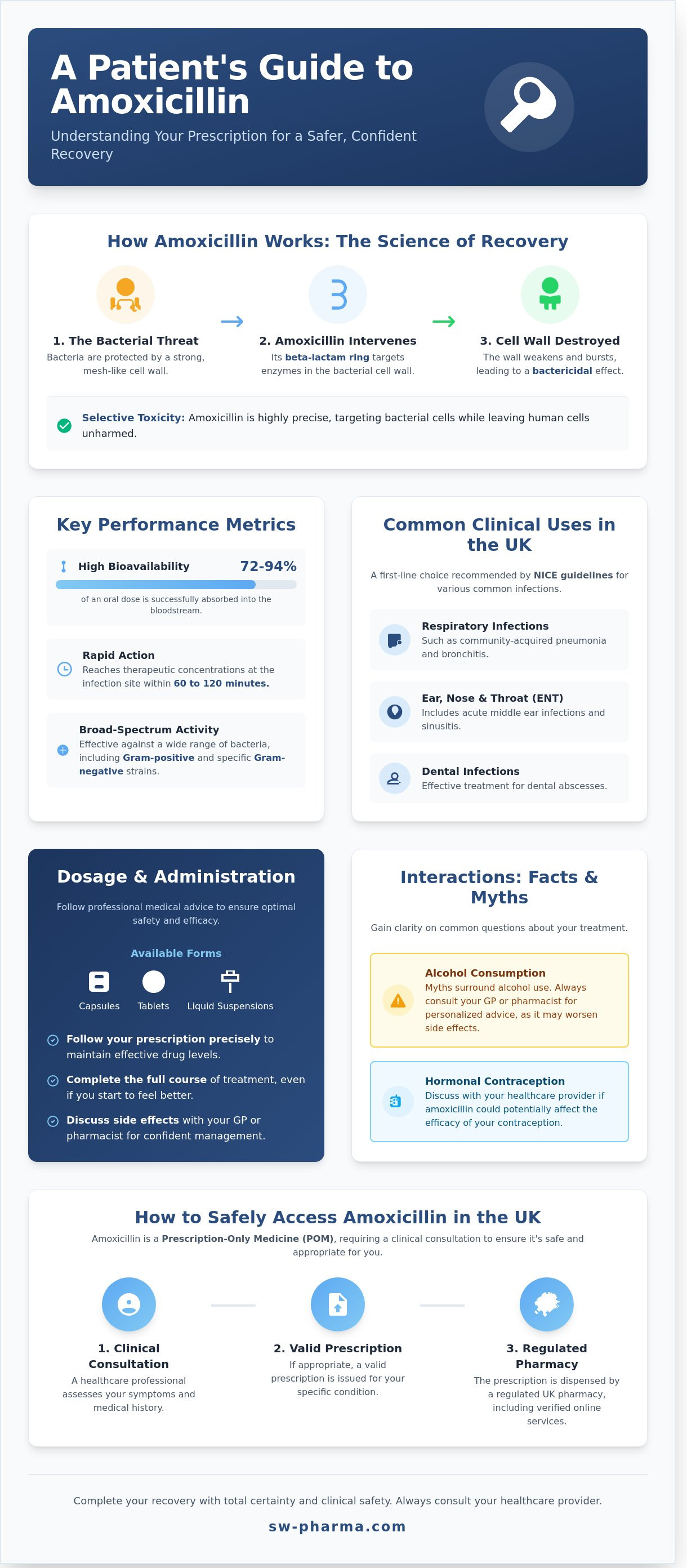
The primary function of this medication is its bactericidal action. Unlike bacteriostatic drugs that merely inhibit growth, amoxicillin actively destroys the bacteria. It achieves this by targeting the peptidoglycan layer, a mesh-like structure that provides the bacterial cell wall with its structural integrity. Because human cells don't possess these specific cell walls, the medication can target the pathogen with high precision. This Amoxicillin overview provides further technical context on its chemical structure and clinical applications against both Gram-positive organisms, like Streptococcus pneumoniae, and specific Gram-negative bacteria.
How Amoxicillin Works Within the Body
The effectiveness of the drug centres on its molecular core, known as the beta-lactam ring. This structure binds to enzymes called penicillin-binding proteins (PBPs) located inside the bacterial cell wall. A beta-lactam antibiotic is a wall-synthesis inhibitor that prevents bacteria from building the protective outer layers necessary for survival. Without this wall, the bacteria cannot withstand internal osmotic pressure and eventually burst. Amoxicillin is particularly valued for its high bioavailability; between 72% and 94% of an oral dose is successfully absorbed into the bloodstream. Because it's acid-stable, it doesn't break down in the stomach, ensuring that therapeutic concentrations reach the site of infection within 60 to 120 minutes.
Why It Remains a Clinical Favourite in the UK
Medical professionals in the UK rely on amoxicillin because of its exceptional safety record and clinical versatility. It's often the first-line choice recommended by NICE guidelines for common conditions such as middle ear infections, dental abscesses, and community-acquired pneumonia. The medication is suitable for almost all age groups, from paediatric patients to the elderly. NHS prescribing data shows that millions of courses are issued annually due to its predictable performance and well-understood side effect profile. Its status as a clinical staple is reinforced by its flexible dosing; it's available in capsules, tablets, and liquid suspensions. The balance of high efficacy, patient accessibility, and 50 years of documented clinical success ensures its continued relevance in modern British pharmacy.
- Broad-spectrum activity: Effective against a wide variety of bacterial strains.
- High absorption: Reaches the bloodstream quickly for faster symptom relief.
- Selective toxicity: Targets bacterial cell walls without damaging human cells.
- Proven safety: Decades of use in the UK healthcare system.
Common Uses and Clinical Indications: What is Amoxicillin Prescribed For?
Doctors across the United Kingdom rely on this broad-spectrum penicillin because of its high bioavailability and proven efficacy against various Gram-positive bacteria. It works by targeting the bacterial cell wall, effectively halting the growth of pathogens that cause common ailments. Statistics from the UK Health Security Agency indicate that respiratory infections remain the primary reason for its prescription, as it's highly effective at reaching therapeutic levels in the lungs and throat. According to NHS information on amoxicillin, the treatment's success depends heavily on the specific bacterial strain involved and the patient's adherence to the prescribed schedule.
Clinicians frequently utilise this medication for several key areas of health:
- Lower Respiratory Infections: Managing community-acquired pneumonia and acute exacerbations of chronic bronchitis.
- Ear, Nose, and Throat (ENT): Treating acute otitis media, which is a common middle ear infection in children, and severe sinusitis when symptoms persist beyond 10 days.
- Dental Care: Dentists favour this antibiotic for treating periapical abscesses and spreading cellulitis because it penetrates bone and soft tissue efficiently.
- Genitourinary and Skin: Addressing uncomplicated urinary tract infections (UTIs) and specific bacterial skin conditions like erysipelas.
Amoxicillin for Chest and Lung Health
Differentiating between a viral cough and a bacterial infection is vital for effective recovery. A 2022 study highlighted that nearly 80% of acute bronchitis cases are viral, meaning antibiotics won't provide relief. However, if a patient presents with a high fever, pleuritic chest pain, or discoloured phlegm, amoxicillin may be required to clear the bronchial tubes. It helps reduce inflammation by eliminating the underlying bacteria that cause fluid build-up. It's essential to complete the full 5 or 7-day course even if breathing improves by day 3 to prevent the infection from returning or contributing to antibiotic resistance.
Secondary Uses: Stomach Ulcers and Lyme Disease
This antibiotic serves specialised roles that go beyond general respiratory or skin infections. For stomach ulcers caused by H. pylori, it's used as part of a "triple therapy" regime alongside clarithromycin and a proton pump inhibitor to eradicate the bacteria. In early-stage Lyme disease, national guidelines suggest a high-dose programme, often involving 1g taken three times daily for a period of 21 days. It's also a standard prophylactic for patients at high risk of endocarditis during invasive dental work, protecting the heart valves from stray bacteria. Understanding these diverse applications is the first step toward achieving a restored sense of physical balance through evidence-based medicine.
Dosage, Administration, and Managing Common Side Effects
Amoxicillin remains a cornerstone of British primary care for bacterial infections. For most adults, a standard therapeutic course involves 250mg to 500mg doses administered three times daily. Clinical guidelines often specify 500mg every eight hours for acute respiratory tract infections to maintain a consistent therapeutic concentration in the bloodstream. You can take these capsules with or without food, as the drug's absorption isn't significantly hindered by gastric contents. Staying hydrated is vital; aim for at least 2 litres of water daily to assist your kidneys in processing the medication efficiently. Detailed amoxicillin drug information suggests that while the drug is generally well-tolerated, vigilance regarding side effects is necessary for a safe recovery.
Common reactions include nausea or mild diarrhoea, which affect roughly 10% of patients. If you notice a faint, non-itchy rash, it's usually not a sign of a true allergy, but you should still inform your GP. Serious adverse reactions are rare, occurring in fewer than 1 in 10,000 cases, yet they require immediate action. Seek emergency care for signs of anaphylaxis, such as facial swelling, wheezing, or a rapid heart rate. Similarly, if you experience severe, watery diarrhoea occurring more than 3 times a day, it could indicate a Clostridioides difficile infection. This condition requires professional intervention to prevent dehydration and bowel inflammation.
Optimising Your Treatment Schedule
Consistency dictates the success of your recovery. Space your doses evenly across the 24-hour cycle, such as 7 am, 3 pm, and 11 pm, to ensure the amoxicillin levels in your blood don't drop below the effective threshold. If you miss a dose, take it as soon as you remember, unless it's nearly time for the next one. Don't take two doses at once to catch up, as this increases toxicity risks without improving efficacy. Keep your capsules in a dry cupboard below 25°C. If you've been prescribed a liquid suspension for a child, store it in the refrigerator between 2°C and 8°C and discard any remainder after 14 days.
Managing Digestive Comfort During Treatment
Antibiotics can disrupt the delicate balance of your gut microbiome. Integrating a high-quality probiotic containing Lactobacillus rhamnosus GG can reduce the risk of antibiotic-associated diarrhoea by up to 50% in some clinical settings. Focus on easily digestible foods like plain rice, toast, or bananas if you feel nauseous after your dose. If mild digestive upset persists for more than 48 hours or prevents you from finishing the course, consult your pharmacist. They're trained to provide tailored advice on anti-diarrhoeal options or lifestyle adjustments to ensure you complete your amoxicillin treatment safely and effectively.
Amoxicillin Interactions: Alcohol, Contraception, and Other Medications
Understanding how amoxicillin interacts with your lifestyle and other medications is vital for ensuring both safety and treatment efficacy. While it's a robust antibiotic, certain substances can alter its metabolism or exacerbate side effects. Being aware of these interactions helps you manage your recovery without unnecessary complications or health scares.
Alcohol and Amoxicillin: The Clinical Reality
A frequent misconception is that drinking alcohol stops antibiotics from working. This isn't strictly true for this specific penicillin. While alcohol does not directly neutralise amoxicillin, it can increase the risk of dehydration and gastrointestinal distress. Clinical data indicates that alcohol can place additional strain on the liver and kidneys, potentially slowing down the body's natural recovery rate. If you experience common side effects like dizziness or nausea, even a small 125ml glass of wine can make these symptoms feel significantly more intense. It's generally better to wait until you've finished your course before drinking to ensure your immune system isn't compromised.
Impact on the Contraceptive Pill
The UK's Faculty of Sexual and Reproductive Healthcare (FSRH) updated their guidance in 2017 to clarify the relationship between antibiotics and hormonal contraception. For many years, women were told to use extra protection, but we now know that non-enzyme-inducing antibiotics like amoxicillin don't reduce the effectiveness of the pill, patch, or ring. The real risk occurs if the antibiotic causes vomiting or severe diarrhoea. If you're sick within 2 hours of taking your contraceptive pill, its 99% efficacy rate may drop, and you should follow the 'missed pill' instructions. Always tell your prescriber about your contraception to ensure you receive the most accurate, personalised advice for your situation.
Drug-to-Drug Interactions
Mixing medications requires professional oversight to avoid adverse reactions. For example, taking allopurinol for gout alongside this antibiotic increases the risk of developing a skin rash by approximately 22%. There are also serious considerations for those on methotrexate; the antibiotic can reduce the kidneys' ability to clear methotrexate from your system, leading to potentially toxic levels in the blood. If you take warfarin, your International Normalised Ratio (INR) may fluctuate. Doctors often recommend more frequent blood tests during the 7 to 10 days of your antibiotic course to prevent bleeding complications. Common interactions to monitor include:
- Methotrexate: Risk of increased toxicity due to reduced renal clearance.
- Allopurinol: Higher incidence of non-allergic skin rashes.
- Warfarin: Potential for increased thinning of the blood and bruising.
- Probenecid: Often used intentionally to increase antibiotic levels in the blood, but requires careful monitoring.
Pre-existing Conditions
Your underlying health profile determines how you'll react to treatment. Patients with glandular fever (infectious mononucleosis) should avoid this medication, as 80% to 90% of these individuals develop a widespread, itchy pink rash that's often mistaken for a penicillin allergy. Similarly, if your kidney function (eGFR) is below 30ml/min, your doctor will likely prescribe a lower dose or a different dosing interval. This adjustment prevents the drug from accumulating to unsafe levels, ensuring your long-term health remains the priority during recovery. Always disclose your full medical history, including any history of asthma or hay fever, before starting a new prescription.
How to Safely Access Amoxicillin in the UK: The Role of Online Pharmacies
Amoxicillin is classified as a Prescription-Only Medicine (POM) under the Human Medicines Regulations 2012. This legal status means you can't purchase the antibiotic over the counter in UK retail outlets or supermarkets. This restriction exists because amoxicillin requires a professional clinical diagnosis to ensure it's the correct treatment for your specific bacterial strain. Misusing antibiotics or taking them when they aren't clinically indicated can lead to unnecessary side effects and contributes to the growing issue of antimicrobial resistance.
To obtain medication safely online, you must use a service that employs GMC-registered doctors or GPhC-regulated pharmacists. You should always look for the green pharmacy logo and a valid registration number on the website. In 2023, the General Pharmaceutical Council monitored over 14,000 premises to ensure patient safety standards are upheld across the country. Verifying these credentials protects you from counterfeit medications that lack the necessary purity and active ingredient concentration required for effective healing.
The SW Pharma Patient Journey
Our process prioritises clinical accuracy and patient convenience. When you request a treatment, you'll complete a comprehensive health questionnaire. Our licensed clinicians review your medical history, current medications, and symptoms to determine if the treatment is safe for you. This rigorous screening helps prevent dangerous drug interactions and ensures the medication's efficacy. It's a modern solution for those who can't easily visit a GP during standard hours.
- Clinical Review: Every request is hand-checked by a healthcare professional to confirm suitability.
- Discreet Delivery: We provide tracked, secure shipping to your home or office, maintaining your privacy.
- Professional Support: Our team is available to answer questions regarding your dosage or potential side effects.
If you're unsure whether your symptoms require an antibiotic, you can use the SW Pharma Online Doctor service for a formal clinical assessment. This digital-first approach saves time while maintaining the high standards of a traditional high-street chemist. It ensures that your treatment plan is tailored to your specific physiological needs.
The Global Challenge of Antibiotic Resistance
Antibiotic resistance is one of the most significant threats to modern medicine. Data from the UK Health Security Agency (UKHSA) showed that resistant infections rose by 4% in 2022. Using amoxicillin to treat viral infections like the flu or a common cold is ineffective and dangerous. Antibiotics only target bacteria; they have no impact on viruses. When people use them incorrectly, bacteria learn to survive the medicine, making future infections much harder to treat.
We follow strict prescribing protocols aligned with NICE guidelines to promote antibiotic stewardship. This means we only issue prescriptions when there's a clear clinical need. You should never save leftover pills for "just in case" or share them with others. Completing the full course is vital, even if you feel better after 48 hours. Stopping early allows the strongest bacteria to survive and multiply, which compromises your long-term health and the effectiveness of future treatments. Our commitment to quality means we never compromise on these safety standards.
Securing Your Path to Recovery with Expert Guidance
Managing a bacterial infection requires more than just a prescription; it demands a clear understanding of how amoxicillin interacts with your unique physiology. You've seen that while this penicillin antibiotic remains a cornerstone for treating respiratory and urinary tract infections, its efficacy relies on precise dosing and a cautious approach to interactions with alcohol or hormonal contraceptives. Safety isn't just about the medicine itself, it's about the professional framework surrounding its distribution. In the UK, 100% of legitimate online pharmacies must maintain GPhC registration to ensure they meet rigorous clinical safety standards.
At SW Pharma, we provide a regulated environment where your health is the primary focus. Our team of Licensed UK Prescribers reviews every consultation to ensure your treatment plan is both safe and clinically appropriate. We combine this medical oversight with the convenience of discreet next-day delivery, ensuring your medication arrives within 24 hours of clinical approval. Don't leave your recovery to chance when expert support is readily accessible. We're dedicated to providing the high-quality care you need to restore your natural balance and vitality.
Speak to an SW Pharma pharmacist or start your clinical consultation today to begin your journey back to full health. We're here to support your wellbeing with the professional expertise you deserve.
Frequently Asked Questions
Can I drink alcohol while taking amoxicillin?
You can generally consume alcohol in moderation while taking amoxicillin, as it doesn't directly interfere with the medication's mechanical efficacy. However, alcohol can dehydrate the body and potentially worsen common side effects like nausea or dizziness. The NHS suggests that maintaining 100% hydration levels supports the immune system's recovery process; therefore, it's often wiser to limit intake until you've completed your full 7-day course of treatment.
How long does it take for amoxicillin to start working?
Amoxicillin begins to reach peak concentration levels in the bloodstream within 1 to 2 hours of the first dose. While the drug starts fighting bacteria immediately, most patients report a noticeable reduction in symptoms like fever or localised pain after 48 to 72 hours. It's essential to continue the treatment for the full duration prescribed by your GP to ensure the bacterial load is completely eradicated from your system.
Is amoxicillin safe to take during pregnancy or while breastfeeding?
Amoxicillin is considered safe for use during all stages of pregnancy and while breastfeeding. Data from the UK Teratology Information Service shows no evidence that it increases the risk of birth defects or miscarriage. While small amounts enter breast milk, it's generally harmless for the baby; however, about 1 in 10 infants might experience mild diarrhoea or a nappy rash. Always inform your midwife before starting any new medication.
What should I do if I have an allergic reaction to amoxicillin?
Stop taking the medication immediately and contact your doctor if you develop a mild rash or itching. If you experience swelling of the face or difficulty breathing, call 999 or visit the nearest A&E department right away. Serious anaphylactic reactions occur in approximately 1 in 10,000 patients. Medical professionals will use adrenaline and antihistamines to stabilise your condition and will update your NHS records to prevent future penicillin prescriptions.
Can amoxicillin treat a viral cold or the flu?
Amoxicillin cannot treat viral infections like the common cold or influenza because it's designed specifically to target bacterial cell walls. Using antibiotics for viruses is ineffective and contributes to the 35% increase in drug-resistant bacteria seen in UK hospitals over recent years. If your symptoms are viral, focus on hydration and rest; the medication won't shorten your recovery time or alleviate symptoms like a runny nose or dry cough.
Does amoxicillin interfere with the contraceptive pill?
Amoxicillin doesn't interfere with the effectiveness of the combined pill or the progestogen-only pill under normal circumstances. The only time your contraception might be compromised is if the antibiotic causes severe vomiting or diarrhoea for more than 24 hours. In these specific cases, the NHS recommends using additional barrier protection, such as condoms, for 7 days after you've recovered from the digestive upset to ensure you're fully protected against pregnancy.
What happens if I stop taking my antibiotics early?
Stopping your treatment early increases the risk of the infection returning and promotes the development of antibiotic resistance. Even if you feel 100% better after 3 days, some resilient bacteria may still survive in your system. Research indicates that failing to complete a prescribed 5-day or 7-day course allows these remaining bacteria to mutate. This makes future infections much harder to treat, often requiring stronger medications with more significant side effects.
Can I take amoxicillin if I am allergic to penicillin?
You shouldn't take amoxicillin if you have a confirmed penicillin allergy because it belongs to the same beta-lactam family of antibiotics. Taking it would likely trigger an identical allergic response, ranging from hives to respiratory distress. While 10% of the UK population believes they have this allergy, clinical testing often shows only 1% have a true, life-threatening sensitivity. Your GP will usually prescribe an alternative, such as erythromycin or clarithromycin, to ensure your safety.
![Wegovy Side Effects Management: A Clinical Guide for UK Patients [2026]](https://getautoseo.com/storage/hero_images/article_665463_1776498695.jpg)
![Wegovy vs Saxenda for Weight Loss: A Clinical Comparison for UK Patients [2026]](https://getautoseo.com/storage/hero_images/article_1261167_1776484316.jpg)