

By the age of 50, approximately 50% of men in Britain experience significant hair thinning according to NHS clinical data, yet many remain trapped in a cycle of trial and error with unverified products. You've likely spent hours researching how to stop male pattern baldness uk, only to be met with conflicting advice and marketing jargon. It's frustrating when you're looking for clinical certainty but find only anecdotal promises that fail to address the underlying hormonal causes of androgenetic alopecia.
We understand the quiet anxiety that comes with noticing a receding hairline and the hesitation surrounding potential side effects of medical intervention. This guide provides the clarity you need by detailing the MHRA-approved medications and therapeutic protocols essential for 2026. You'll discover the exact steps to halt recession, the science of improving hair density, and how to navigate the UK prescription process with professional confidence. We'll examine the pharmacological options and the realistic six month timeline required to see genuine physiological change under current healthcare standards.
Key Takeaways
- Understand the biological role of DHT and follicle miniaturisation to identify the specific physiological causes behind your hair thinning.
- Discover how to stop male pattern baldness uk by utilising MHRA-approved clinical treatments like Finasteride and Minoxidil to halt loss and stimulate regrowth.
- Learn why UK clinicians often recommend a "Combined Therapy" approach to maximise the synergy between different medical mechanisms.
- Follow a structured action plan that begins with a Norwood Scale self-assessment and leads to a professional online clinical consultation.
- Secure discreet and professional care through registered UK online pharmacies, ensuring your treatment meets the highest safety and quality standards.
Understanding Male Pattern Baldness (Androgenetic Alopecia) in the UK
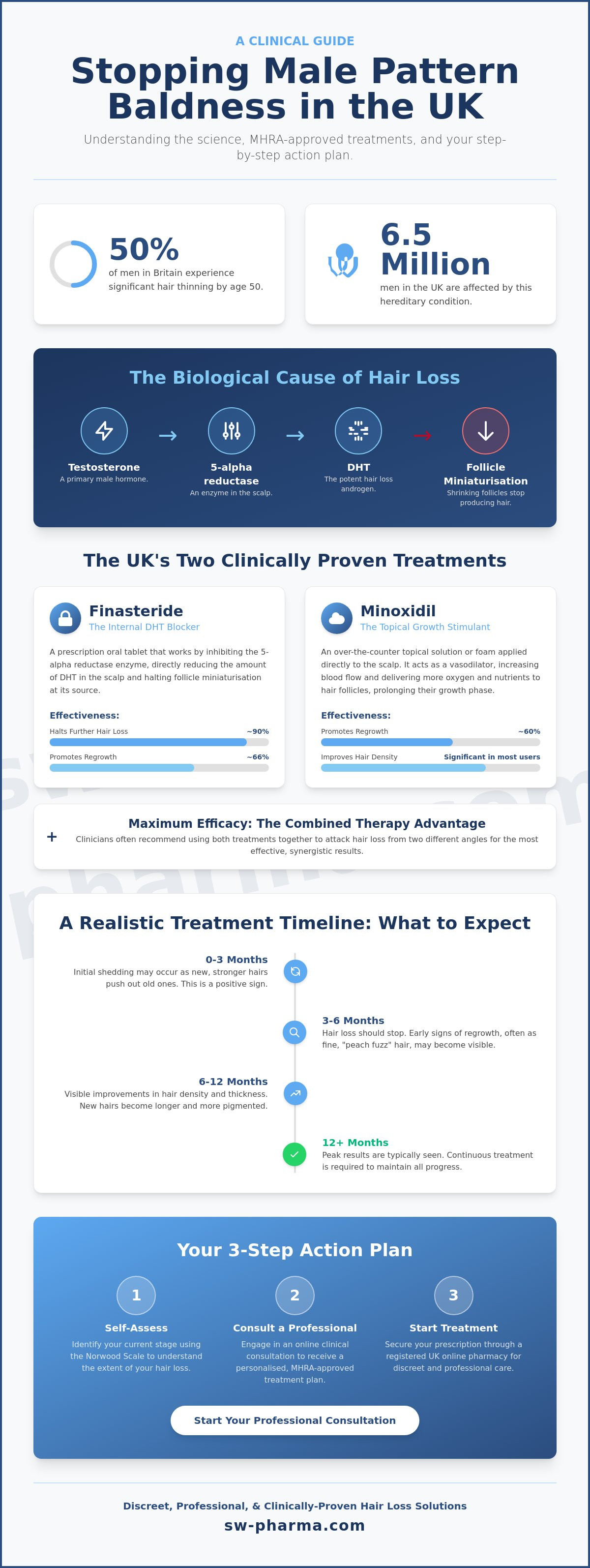
Male pattern baldness, clinically known as androgenetic alopecia, is the most common cause of hair loss among men in the British Isles. Statistics indicate that roughly 6.5 million men in the UK experience some form of hair thinning or recession at any given time. This condition is not a disease, but a genetic sensitivity to specific hormones that leads to a process called miniaturisation. During this process, hair follicles gradually shrink, producing shorter and finer strands until the follicle eventually stops producing hair altogether.
Distinguishing between permanent Pattern hair loss and temporary shedding is the first step toward effective management. Temporary loss, or telogen effluvium, usually occurs after physical stress or illness and often resolves on its own. In contrast, androgenetic alopecia is progressive. Understanding the underlying mechanism is essential for anyone researching how to stop male pattern baldness uk, as clinical interventions are most effective when started before follicles reach the point of total inactivity.
The Role of DHT: The Primary Cause of Hair Loss
The biological driver of male pattern baldness is Dihydrotestosterone (DHT), a potent androgen derived from testosterone. An enzyme called 5-alpha reductase converts testosterone into DHT within the scalp. While DHT is vital for male development, certain follicles are genetically programmed to be hypersensitive to it. This sensitivity is usually concentrated in the temples and the crown, which explains why hair on the back and sides often remains intact.
It's a common misconception that hair loss results from poor circulation or "clogged pores" on the scalp. Clinical data shows that the issue is hormonal and genetic. When DHT binds to receptors in susceptible follicles, it shortens the growth phase of the hair cycle. Over several years, the hair becomes too thin to reach the surface of the skin. This biological reality is why professional treatments focus on blocking DHT or stimulating the follicle's growth phase rather than simple topical cleansing.
Identifying the Early Signs: The Norwood Scale
UK clinicians and trichologists use the Norwood Scale as the gold standard for categorising the stages of hair loss. This scale ranges from Stage 1, which shows no visible loss, to Stage 7, representing advanced hair depletion. Early signs typically manifest as a "widow’s peak" recession at the hairline or a subtle thinning at the vertex, also known as the crown. Identifying these changes early is vital because dormant follicles are easier to revitalise than those that have been inactive for years.
If you're looking for how to stop male pattern baldness uk, you should monitor your hairline and crown density every six months. Practical signs include a more visible scalp under bright bathroom lights or a change in how your hair responds to styling products. Because the miniaturisation process is slow, many men lose up to 50 percent of their hair density before the loss becomes obvious to others. Early intervention through clinically proven methods provides the highest probability of maintaining existing hair density and preventing further recession.
Clinically Proven Treatments: Finasteride and Minoxidil
In the UK, the Medicines and Healthcare products Regulatory Agency (MHRA) recognizes only two pharmacological treatments for androgenetic alopecia. These are Finasteride and Minoxidil. While both are effective, they target hair loss from different angles. One addresses the hormonal root cause, while the other stimulates the follicle directly. According to NHS information on hair loss, male pattern baldness is usually hereditary and follows a predictable pattern. Because the condition is considered cosmetic, these treatments are rarely available through the NHS. Patients typically seek private prescriptions or over-the-counter options to manage their condition.
Success depends on long-term commitment. If you stop treatment, any hair regained will likely fall out within 6 to 12 months. This is a permanent biological management strategy, not a one-time fix. Understanding the science behind these drugs is the first step for anyone looking at how to stop male pattern baldness uk effectively.
Finasteride: The Internal DHT Blocker
Finasteride is a Type II 5-alpha reductase inhibitor. It targets the hormone Dihydrotestosterone (DHT), which is responsible for shrinking hair follicles in genetically predisposed men. Clinical data shows that a daily 1mg dose can lower scalp DHT levels by approximately 70%. This significant reduction allows follicles to return to a healthy growth cycle. Safety data from long-term studies suggests that most men tolerate the medication well, with a low incidence of side effects. It's often the primary recommendation for those researching how to stop male pattern baldness uk through medical intervention.
Minoxidil: The Topical Growth Stimulant
Minoxidil, often sold under the brand name Regaine, is a vasodilator. It works by widening blood vessels and opening potassium channels, which increases blood flow and nutrient delivery to the hair follicles. Users often notice a "shedding phase" during the first 2 to 4 weeks of application. This happens because the drug pushes out old, thin hairs to make room for stronger, thicker strands. In the UK market, you'll find 2% and 5% concentrations. The 5% foam is frequently preferred over the liquid version because it dries faster and causes less scalp irritation for many men.
When choosing a regimen, it's vital to consider the purity and concentration of the active ingredients to ensure optimal results. Combining these two treatments often produces a synergistic effect that is more powerful than using either alone.
Choosing the Right Treatment Path for UK Patients
Clinical consensus in the UK has shifted toward "Combined Therapy" as the most effective strategy for hair preservation. This approach uses Finasteride to block DHT and Minoxidil to promote scalp blood flow. Clinical data suggests that using both treatments simultaneously can result in a 15% to 20% increase in hair density compared to using either alone. It's the gold standard for men researching how to stop male pattern baldness uk effectively. While branded products like Regaine are household names, many patients now opt for generic Finasteride to manage long-term costs. A monthly supply of generic Finasteride often costs between £12 and £18, whereas branded topical foams can exceed £35 per month.
Supportive measures like caffeine shampoos or biotin supplements play a role, but they aren't curative. According to Harvard Health on hereditary baldness, these auxiliary treatments don't address the underlying hormonal cause of follicle miniaturisation. They function more like high-quality fertiliser; they improve the environment for growth, but they won't stop the hormonal "drought" that causes the follicle to shut down. For true prevention, a pharmaceutical intervention is required to stabilise the hair cycle.
Topical vs. Oral: Which is Better for Your Lifestyle?
Choosing between a daily pill and a twice-daily foam depends on your daily habits and priorities. Oral tablets offer maximum discretion and take seconds to consume, making them ideal for frequent travellers or those with busy morning routines. Topical foams require time to dry and can sometimes affect hair styling, which some men find cumbersome. However, topical Finasteride is gaining significant traction in 2026. It targets the scalp directly, which may reduce systemic absorption for those who are particularly sensitive to medication or concerned about internal side effects.
The Importance of MHRA-Approved Medications
Safety is the most critical factor when starting a hair loss regimen. The "grey market" for online supplements is flooded with unlabelled or counterfeit products that lack clinical oversight. To ensure drug purity and exact dosage, you should only source treatments from a GPhC-registered pharmacy. These institutions follow the rigorous safety standards set by the Medicines and Healthcare products Regulatory Agency (MHRA). For a detailed breakdown of how these regulated medicines work within the body, you can read our Finasteride clinical guide. Following a regulated path is the only way to ensure you're learning how to stop male pattern baldness uk safely and effectively without risking your broader health profile.
- Combined Therapy: Addresses both the cause (DHT) and the growth environment.
- Cost Efficiency: Generic options provide the same bioavailable active ingredients at a fraction of the branded price.
- Regulation: MHRA approval ensures the product contains exactly what is on the label.
Your Action Plan: How to Stop Hair Loss Step-by-Step
Stopping hair loss requires a methodical approach rather than a reactive one. Success depends on clinical consistency and early intervention. Follow these five steps to implement a strategy on how to stop male pattern baldness uk effectively and safely.
- Step 1: Baseline Assessment. Use the Norwood Scale to identify your current stage. Most men start noticing recession at Stage 2. Documenting your starting point with clear photos is vital for measuring the efficacy of your chosen protocol.
- Step 2: Professional Consultation. UK regulations ensure safety through clinical assessments. You can consult a GP or use a licensed UK online pharmacy. These platforms use medical questionnaires reviewed by pharmacists to ensure treatments like Finasteride are appropriate for your specific medical history.
- Step 3: Selection of Protocol. Based on your assessment, you'll likely use a DHT blocker, a growth stimulant, or a combination of both. Clinical evidence suggests that using both Finasteride and Minoxidil together offers a higher success rate than using either alone.
- Step 4: Establish a Routine. Consistency is the single most important factor. Set a daily reminder for your medication. Missing doses disrupts the steady-state concentration of active ingredients in your system, which can stall progress.
- Step 5: Quarterly Monitoring. Take progress photos every 90 days. Hair grows at an average rate of 1cm per month, so changes are too slow to notice in a mirror daily. Comparing photos at 3-month intervals provides an objective view of your hair density.
The Expectation Timeline: When Will You See Results?
Hair follicles operate on long biological cycles. You won't see changes overnight. Between months 1 and 3, you might experience an initial shed. This happens as follicles transition from the resting phase to the growth phase. It's actually a positive sign that the medication is working. By months 3 to 6, you'll likely see vellus hair, which looks like fine peach fuzz. Maximum visible improvement and the maintenance phase typically occur between months 6 and 12.
Managing Potential Side Effects
Clinical data indicates that Finasteride is well-tolerated by the vast majority of men. In long-term studies, less than 2% of users reported sexual side effects. These symptoms usually resolve if the medication is discontinued. If you use topical treatments and experience scalp redness or itching, it's often a reaction to propylene glycol. Switching to a foam-based solution can alleviate this irritation. Always report persistent symptoms to your healthcare provider to adjust your dosage or delivery method.
Professional guidance is the first step toward reclaiming your hair density. Start your clinical assessment today to find a treatment plan that fits your needs.
Discreet and Professional Hair Loss Solutions with SW Pharma
Finding the right path on how to stop male pattern baldness uk doesn't require a public visit to a high-street clinic. SW Pharma serves as a fully registered UK online pharmacy, bridging the gap between clinical excellence and the privacy patients often require. We offer a curated selection of treatments, ranging from globally recognised brands to cost-effective generic options that contain the same regulated active ingredients. Our national delivery network covers the entire UK, ensuring your medication arrives in discreet packaging. This approach combines pharmaceutical precision with the ease of 2026 digital standards, allowing you to focus on results without the logistical hurdles of traditional appointments.
We understand that hair restoration is a long-term commitment. That's why we focus on providing consistent access to high-quality MHRA-approved medications. Whether you're looking for preventative solutions or treatments to stimulate regrowth, our inventory is managed to ensure availability and quality. By removing the middleman and operating digitally, we provide a streamlined service that respects both your time and your need for professional medical oversight.
How Our Online Consultation Works
The consultation process is straightforward and prioritises your safety. You'll complete a targeted health questionnaire that allows our licensed prescribers to evaluate your suitability for specific hair loss medications. We don't just process orders; we conduct a thorough clinical review of your medical history and current health status. This ensures that the intervention you choose is both safe and effective for your physiology. Our pharmacy team provides continuous support throughout your journey. If you have questions about how your body is responding to the treatment, our experts are just a message away, offering the same level of care you'd expect from a local pharmacist.
Why SW Pharma is the Trusted Choice for Men’s Health
Reliability is the cornerstone of our service. SW Pharma operates under strict GPhC registration, meaning every pill and solution we dispense meets high UK healthcare benchmarks. We believe that quality should never be a compromise, especially when it concerns your hormonal health and self-confidence. To help you navigate the digital landscape safely, we've developed resources like our Online Pharmacy London guide, which details how to identify legitimate medical providers. By choosing a regulated partner, you ensure that your treatment plan is backed by science and professional accountability. Take the first step toward reclaiming your hair density and start your journey to thicker hair today.
Securing Your Hair Health for the Future
Taking proactive steps today defines the future of your hair density. Clinical data suggests that early intervention with licensed treatments like Finasteride can halt hair loss in approximately 83% of men over a two-year period. Success in 2026 relies on combining these evidence-based medications with a consistent daily routine. When you're researching how to stop male pattern baldness uk, it's vital to choose a partner that prioritizes clinical safety and regulatory compliance over quick fixes.
SW Pharma operates as a GPhC Registered Pharmacy, ensuring every treatment plan is clinically reviewed by licensed prescribers before being dispatched via discreet national UK delivery. You don't have to navigate these physiological changes alone or rely on unproven supplements. By choosing a professional path, you're investing in a solution backed by pharmaceutical science and rigorous UK safety standards.
View our range of clinically proven hair loss treatments and start your free consultation
The journey toward maintaining your natural hair is a marathon, not a sprint. With the right clinical support and a commitment to proven science, you can approach the coming years with renewed confidence and peace of mind.
Frequently Asked Questions
Can I really stop male pattern baldness once it has started?
Yes, you can effectively stop the progression of male pattern baldness if you intervene while hair follicles are still active. Clinical trials published in the Journal of Investigative Dermatology indicate that 90% of men using Finasteride see a cessation of hair loss or visible regrowth. Success depends on maintaining a consistent daily treatment cycle. Once a follicle has completely miniaturised and scarred over, typically after several years of inactivity, pharmacological intervention becomes significantly less effective.
Is Finasteride available on the NHS for hair loss?
No, Finasteride isn't currently available on the NHS for the treatment of hair loss because it's classified as a cosmetic concern. You must obtain a private prescription from a registered UK clinician to access this medication. While the NHS provides Finasteride for enlarged prostates, hair loss patients must cover the full cost themselves. Prices at UK pharmacies typically range from £10 to £40 for a 28 day supply, depending on whether you choose branded or generic versions.
What happens if I stop using hair loss treatments?
Your hair loss will return to its natural genetic baseline within 3 to 6 months if you discontinue treatment. The active ingredients only work while they're present in your system to block DHT or stimulate blood flow to the scalp. Data from the British Association of Dermatologists suggests that any hair retained or regrown during the treatment period will likely shed once the biochemical support is removed. It's a long term commitment rather than a permanent cure.
Does wearing a hat cause male pattern baldness?
No, wearing a hat doesn't cause male pattern baldness or accelerate the process of follicle miniaturisation. Androgenetic alopecia is driven by genetic sensitivity to Dihydrotestosterone (DHT), not by external friction or a lack of air reaching the scalp. A 2013 study of identical twins confirmed that hat usage had no statistically significant impact on hair density. You'd need to wear a hat so tightly that it causes physical scalp trauma to see any lasting damage.
Can stress make male pattern baldness worse?
Stress doesn't cause male pattern baldness directly, but it can trigger a secondary condition called Telogen Effluvium. This physiological response can force up to 30% of your hair into the shedding phase prematurely. When combined with existing thinning, the loss appears much more aggressive and sudden. Research indicates that high cortisol levels can inhibit the synthesis of essential hair proteins, making it harder for those wondering how to stop male pattern baldness uk to see results without managing lifestyle factors.
How do I know if my hair loss is permanent or temporary?
Permanent hair loss typically follows the Norwood Scale, starting at the temples or crown, whereas temporary loss is often diffuse and occurs suddenly across the whole scalp. If you notice a receding hairline that has persisted for more than 6 months, it's likely androgenetic alopecia. Temporary shedding, often linked to nutritional deficiencies or illness, usually resolves within 180 days once the underlying cause is addressed. A professional scalp analysis using a trichoscope can confirm if follicles are permanently miniaturised.
Is it safe to buy hair loss medication from an online pharmacy?
It's safe to purchase hair loss medication online provided the pharmacy is registered with the General Pharmaceutical Council (GPhC) in the UK. Always look for the green GPhC logo and verify their credentials on the official register before making a purchase. Buying from unregulated sources increases the risk of receiving counterfeit products that lack the correct active ingredient concentration. Understanding how to stop male pattern baldness uk safely involves ensuring your provider requires a clinical assessment before dispensing any medication.