
![Rigevidon vs Microgynon 30: A Clinical Comparison for UK Patients [2026]](https://getautoseo.com/storage/hero_images/article_1014769_1777771126.jpg)
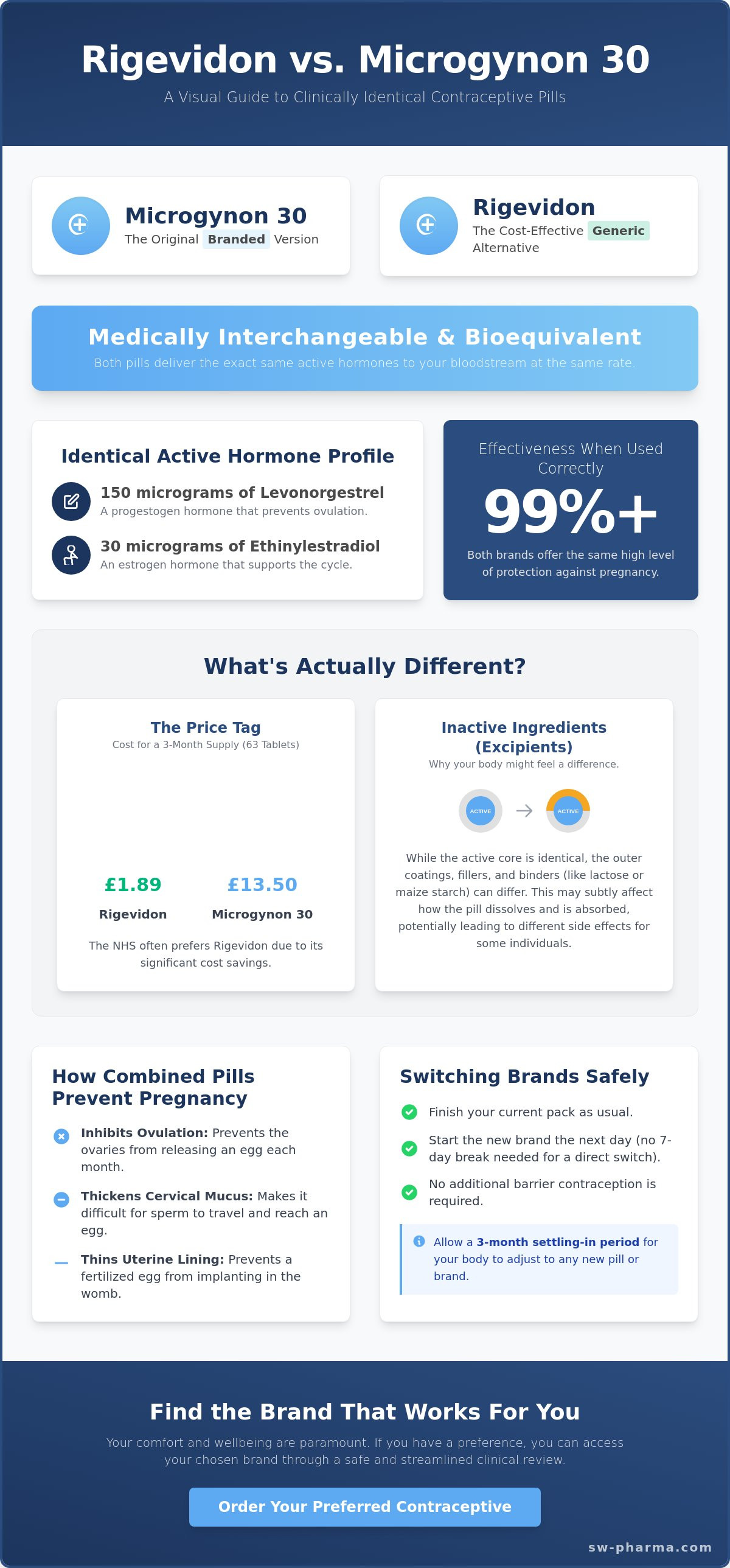
The most expensive pill isn't always the "best" one, but that doesn't mean your preference for a specific brand is just in your head. It's unsettling when a pharmacy switch leaves you questioning the safety or consistency of your contraception. When evaluating rigevidon vs microgynon 30, it's important to recognize that while they're medically interchangeable, your physical experience is a valid clinical factor. Both pills are over 99% effective at preventing pregnancy when used correctly. They share identical active hormone profiles of 150 micrograms of levonorgestrel and 30 micrograms of ethinylestradiol. However, the NHS often prioritizes Rigevidon because it costs approximately £1.89 for 63 tablets, compared to the £13.50 price tag for a three month supply of branded Microgynon 30 recorded in January 2026.
You likely want the peace of mind that comes with a stable routine, free from unexpected mood shifts or skin changes. We'll help you understand the clinical bioequivalence of these "sister" pills and explain why inactive ingredients like coatings and fillers can influence how your body responds. This article provides the scientific clarity you need to choose the right contraceptive for your lifestyle. You'll gain the confidence to manage a transition between brands or advocate for the version that keeps your hormones in perfect balance.
Key Takeaways
- Understand that Rigevidon and Microgynon 30 are clinically identical in hormone content but differ in their origins as branded and generic versions.
- Learn why "excipients" like lactose or maize starch are the key to understanding the rigevidon vs microgynon 30 brand experience and potential side effects.
- Discover the safe clinical protocol for switching brands without needing additional barrier contraception or compromising your protection.
- Identify the common three-month settling-in timeframe required for your body to adjust to hormonal changes and when to seek professional guidance.
- Explore how a streamlined clinical review process ensures you can access the specific brand that best supports your long-term wellbeing.
Rigevidon and Microgynon 30: Are They Truly the Same?
When you look at a pack of Rigevidon next to a pack of Microgynon 30, the most striking difference is the branding and price point rather than the medicine itself. Both medications are classified as a combined oral contraceptive pill (COCP) and serve the primary purpose of preventing pregnancy. Microgynon 30 is the original branded version developed by the pharmaceutical company Bayer, while Rigevidon is a generic alternative produced by Gedeon Richter. Despite the different manufacturers, each tablet contains exactly 30 micrograms of ethinylestradiol and 150 micrograms of levonorgestrel.
The Medicines and Healthcare products Regulatory Agency (MHRA) classifies these two pills as bioequivalent. This clinical term means that Rigevidon provides the same active hormone concentration in your bloodstream as Microgynon 30. For a generic pill to be approved for use in the UK, it must demonstrate through rigorous testing that it performs in the body in the same way as the original branded product. Comparing rigevidon vs microgynon 30 shows that they're pharmaceutical "sisters" with the same core DNA.
How Combined Pills Prevent Pregnancy
Combined pills utilize a three-pronged approach to ensure high reliability. This mechanism of action includes:
- Inhibiting ovulation, which ensures the ovaries don't release an egg each month.
- Thickening the mucus in the neck of the womb, making it difficult for sperm to reach an egg.
- Thinning the lining of the uterus to prevent a fertilized egg from successfully implanting.
Ethinylestradiol and levonorgestrel work together to mimic a stable hormonal environment that suppresses the body's natural ovulation signals. When you take either brand consistently, they offer over 99% effectiveness in preventing pregnancy. The clinical protection doesn't falter based on the name on the box.
Generic vs. Branded Contraception in the UK
The NHS frequently prescribes Rigevidon because it's a more cost-effective option for the healthcare system than Microgynon 30. Choosing a generic doesn't mean you're receiving a lower-quality product. Every batch of medication must meet the same strict purity and safety standards before it reaches a pharmacy shelf. The General Pharmaceutical Council (GPhC) regulates both physical and online pharmacies to ensure all dispensed medications are authentic. Whether you prefer the familiarity of a brand name or the accessibility of a generic, your safety is guaranteed by these regulatory bodies. Understanding rigevidon vs microgynon 30 helps you realize that the primary difference lies in the manufacturer's name, not the quality of the ingredients.
Active Hormones vs. Inactive Ingredients: Why Your Body Might React Differently
While the active hormones in the rigevidon vs microgynon 30 debate are identical, the supporting structure of the tablet is not. These additional substances, known as excipients, are essential for maintaining the tablet's shape, stability, and shelf-life. They act as the "delivery vehicle" for the hormones. Although they don't prevent pregnancy themselves, they dictate how the pill dissolves in your digestive tract. Differences in pill coatings or the physical pressure used during the manufacturing process can subtly change the rate of hormone absorption. If one brand dissolves faster than another, your body might experience a slight "peak" in hormone levels that triggers a physical response.
Psychology also plays a role through the nocebo effect. This occurs when a patient's negative expectations about a new brand lead to the actual experience of side effects. If you've been told that switching to a generic pill causes mood swings, your brain may become hyper-aware of natural hormonal fluctuations, interpreting them as a brand-related issue. If you've found a brand that works perfectly for your cycle, you can order your preferred contraceptive online following a brief clinical assessment.
The Science of Excipients and Fillers
Excipients are necessary to ensure that 180 micrograms of active hormones can be handled and swallowed as a physical tablet. Without these binders and fillers, the medication would be a microscopic amount of powder. Common ingredients found in these pills include:
- Lactose monohydrate: A sugar used as a filler that can occasionally cause bloating in those with high sensitivity.
- Maize starch: A common binder that helps the tablet maintain its integrity.
- Povidone: A synthetic polymer that ensures the active ingredients are distributed evenly.
You can find a complete list of these substances in the Microgynon 30 patient information leaflet. Even when the chemical formula is consistent, variations in the manufacturing site can lead to microscopic differences in how the tablet's crystal structure is formed, potentially affecting its bioavailability.
Bioequivalence and Clinical Standards
The MHRA rigorously tests generic drugs to ensure they perform within strict therapeutic windows. For a generic to be approved, it must demonstrate bioequivalence, meaning it delivers the same amount of active ingredient to the blood in a similar timeframe. However, a 5-10% variation in the rate of absorption is often clinically acceptable to regulators. While this tiny window doesn't affect the pill's 99% effectiveness, sensitive individuals might feel the difference during the first few weeks of a brand switch. A body's reaction to a change in brand is a biological reality, not just a psychological one. Acknowledging these subtle shifts is the first step in finding the contraceptive that best fits your unique physiology.
Side Effects and Effectiveness: A Side-by-Side Comparison
When comparing rigevidon vs microgynon 30, the clinical side effect profile is effectively a mirror image because both medications share the same active hormonal concentration. Most users experience mild symptoms such as nausea, headaches, or breast tenderness during the initial weeks of use. These aren't signs that the medication is "wrong" for you; rather, they're indicators that your body is adapting to the 30 micrograms of ethinylestradiol and 150 micrograms of levonorgestrel. Most of these minor issues resolve without intervention as your system reaches a new equilibrium.
A 90-day settling-in period is the standard clinical expectation for any hormonal change. It's during this three-month window that your endocrine system recalibrates to the exogenous hormones. If you notice mood changes or skin issues like acne, it's helpful to track them in a diary. Since both pills use levonorgestrel, a progestogen with slightly androgenic properties, they affect the skin in the same way. Similarly, neither pill is specifically designed for weight loss. Any minor weight fluctuations are typically due to temporary water retention rather than a change in body fat.
Managing Common Side Effects
Practical adjustments can often mitigate daily discomfort. If you experience nausea, try taking your tablet with a meal or just before bed to allow your body to process the hormones while you sleep. While mild side effects are common, you should stay alert for rare but serious complications. Venous thromboembolism (VTE), or blood clots, is a risk associated with all combined pills, though the absolute risk remains very low for most healthy patients. For a deeper dive into safety protocols and risk factors, consult the Microgynon 30: The Complete UK Patient Guide.
Effectiveness and the 'Missed Pill' Rule
The reliability of your contraception depends on consistency. When analyzing the daily management of rigevidon vs microgynon 30, both brands provide the same 24-hour window for a missed pill. This means if you're less than 24 hours late, you're still protected; just take the missed pill immediately and continue the pack as normal. The effectiveness of both medications can be compromised by severe gastrointestinal upset. If you vomit or have very severe diarrhoea within two to three hours of taking your tablet, the active hormones may not have been fully absorbed. In these instances, you should follow the "missed pill" instructions provided in your specific brand's leaflet to maintain your 99% protection rate.
Switching Between Rigevidon and Microgynon 30: What You Need to Know
Transitioning between these two medications is clinically seamless. Because they share the same active hormonal profile, your body remains protected against pregnancy throughout the process. You don't need to use additional barrier contraception, such as condoms, during the transition; your 99% protection rate stays intact. The most important factor is maintaining the 21-day active pill and 7-day break cycle without interruption. While the hormones are the same, checking with a pharmacist is sensible if you have known allergies to specific pill coatings or fillers. When evaluating rigevidon vs microgynon 30 for your own needs, remember that consistency in your daily routine is the best way to prevent breakthrough bleeding.
We recommend tracking your physical and emotional symptoms during the first 90 days of a new brand. Use a simple diary or a cycle-tracking app to note any changes in skin clarity, mood, or spotting. This data is invaluable if you need to discuss your contraceptive choices with a healthcare professional later. If you've found that one specific brand provides a better "balance" for your system, you can request your preferred contraceptive pill through our secure clinical review process.
A Step-by-Step Transition Guide
Following a structured protocol ensures your contraceptive cover remains at its maximum effectiveness. Use these three steps to manage your switch safely:
- Step 1: Complete your current 21-day strip of either Rigevidon or Microgynon 30 until the pack is entirely empty.
- Step 2: Observe your standard 7-day pill-free interval. You'll likely experience a withdrawal bleed during this time as your body reacts to the temporary drop in hormones.
- Step 3: Begin the first tablet of your new brand on the scheduled 8th day. It's vital not to extend the break beyond seven days, as this can increase the risk of ovulation.
When to Request a Specific Brand
While the NHS often defaults to Rigevidon for cost-efficiency, you have the right to request a specific brand if you feel it suits your body better. Some women find that the subtle differences in inactive ingredients impact their wellbeing or cycle stability over time. If you've tracked your symptoms and notice a negative shift after a brand change, speak to your prescriber. You can ask for your prescription to be "dispensed as written" for the specific brand name rather than the generic formula. Maintaining a stable brand can be essential for your mental health and predictability. When discussing rigevidon vs microgynon 30 with a professional, focus on your lived experience and how your body responds to the specific formulation.
Safe Access to Contraception via SW Pharma
Traditional pharmacy visits can be time-consuming and often lack the privacy you might prefer for your healthcare decisions. SW Pharma operates as a professional alternative, combining the clinical rigour of a hospital pharmacy with the accessibility of digital technology. Every request for contraception undergoes a thorough review by licensed prescribers. This isn't a simple transaction; it's a healthcare service designed to ensure that either Rigevidon or Microgynon 30 is safe for your specific medical profile. We adhere strictly to the standards set by the General Pharmaceutical Council (GPhC), ensuring that patient safety remains the central pillar of our operation.
Reliability is essential when managing your reproductive health. Our system ensures that once your clinical assessment is approved, your medication is dispatched promptly. Discreet, reliable delivery across the UK means you can maintain your 21-day cycle without the risk of missing a dose due to local stock shortages. We provide a bridge between scientific expertise and your daily needs, offering a level of care that respects both your time and your health requirements.
The Convenience of Online Clinical Consultations
Digital healthcare has evolved significantly by 2026, making routine contraceptive refills more efficient than ever. You don't need to book an in-person appointment or wait in a public queue to manage your hormonal health. Our pharmacists provide expert advice, ensuring you understand the transition between brands or the management of potential side effects. This professional support helps you maintain a consistent contraceptive routine without the logistical hurdles of high-street visits. For those interested in the broader landscape of digital health, our Online Pharmacy London: The Complete Guide offers a comprehensive look at how we maintain safe pharmaceutical care in a modern environment.
Your Choice, Your Health
We recognize that the rigevidon vs microgynon 30 decision is often based on how your body responds to specific excipients. Because we prioritize your biological response and personal preference, we maintain consistent stock of both the branded and generic versions. You aren't forced into a brand switch based on local pharmacy availability. Our transparent pricing and clinical support extend across our entire range of women's health treatments, giving you the autonomy to choose the medication that supports your wellbeing. Your health deserves a partner that values clinical precision and your right to choose. Order your contraceptive pill through our secure clinical service today to experience a professional, patient-focused approach to contraception.
Empowering Your Contraceptive Choice
Deciding between rigevidon vs microgynon 30 doesn't have to be a source of anxiety. Clinical data confirms that both pills provide over 99% protection against pregnancy through an identical concentration of 30 micrograms of ethinylestradiol and 150 micrograms of levonorgestrel. While their active components are the same, your body's unique response to inactive excipients is a valid factor in your long-term comfort. Finding the brand that maintains your physical and emotional equilibrium is essential for a sustainable healthcare routine.
As a GPhC Registered Pharmacy, we're committed to supporting your autonomy. Our licensed prescribers provide a free clinical review to ensure your chosen medication is safe for your medical history. Whether you prefer the original branded pill or its generic counterpart, you can order Rigevidon or Microgynon 30 online via SW Pharma with the confidence of discreet, next-day delivery across the UK. You deserve a contraceptive plan that fits your life without compromising on quality or peace of mind. Take the next step toward a balanced cycle with a partner who values clinical excellence and your personal wellbeing.
Frequently Asked Questions
Is Rigevidon as effective as Microgynon 30?
Rigevidon is exactly as effective as Microgynon 30, offering over 99% protection when taken correctly. Both pills contain the same concentration of ethinylestradiol and levonorgestrel. This means the clinical performance in preventing pregnancy remains constant regardless of which brand you choose. You don't sacrifice safety or reliability when opting for the generic version over the branded original.
Can I switch from Microgynon 30 to Rigevidon halfway through a pack?
It's best to finish your current pack before switching brands. Changing medications mid-cycle can increase the likelihood of breakthrough bleeding or spotting. To maintain a stable hormonal environment, complete your 21-day strip, take the 7-day break, and then start the new brand on the eighth day. This ensures your protection remains continuous and your cycle stays predictable.
Why is Rigevidon cheaper than Microgynon 30 if they are the same?
Rigevidon is cheaper because it's a generic medication, meaning the manufacturer didn't have to fund the initial research and development costs that the original brand did. As of January 2026, a three-month supply of Microgynon 30 is priced at £13.50, while Rigevidon is listed at £1.89 for 63 tablets in some NHS formularies. The lower price reflects market competition, not a reduction in pharmaceutical quality.
What should I do if I feel depressed after switching to Rigevidon?
If you experience a persistent low mood after switching, you should consult your GP or pharmacist. While the active hormones are identical in the rigevidon vs microgynon 30 comparison, sensitivities to inactive fillers can occasionally influence your wellbeing. Track your symptoms for 90 days to see if they settle. If your mental health is significantly affected, your prescriber may suggest returning to your previous brand.
Do Rigevidon and Microgynon 30 have the same risk of blood clots?
Yes, both medications carry the same risk profile for venous thromboembolism (VTE). Since the hormonal dosage is identical, the risk of blood clots doesn't increase or decrease when switching between these two brands. This risk is generally very low for healthy individuals. Your prescriber will assess your specific risk factors, such as smoking status and BMI, before issuing a prescription for either pill.
Can I use Rigevidon and Microgynon 30 interchangeably?
You can use them interchangeably in terms of clinical protection, but consistency is better for cycle stability. While they are bioequivalent, switching back and forth frequently might trigger minor side effects due to the different inactive ingredients used in the tablet coatings. It's usually more comfortable for your system to stick with one brand for at least three months to allow your body to reach a stable equilibrium.
Is it normal to have spotting when I switch contraceptive brands?
Spotting is a common and normal side effect when transitioning between different contraceptive brands. Your body is adapting to the specific rate at which the new tablet dissolves and releases hormones into your bloodstream. This breakthrough bleeding usually resolves within the first three cycles. If spotting continues beyond 90 days or becomes heavy, it's a good idea to seek professional medical advice to rule out other causes.
How long does it take for my body to adjust to a new pill brand?
It typically takes 90 days for your endocrine system to fully adjust to a new pill brand. During this three-month window, you might notice minor fluctuations in your skin, mood, or cycle regularity. These changes are usually temporary as your body settles into the new formulation. If you still feel uncomfortable after completing the third pack, it may be worth discussing an alternative brand or method with your clinical team.